November 11, 2017

DOUG / DISNEY'S DOUG

DOUG/
BRAND SPANKING NEW! DOUG/
DISNEY’S DOUG
(Nickelodeon, August 11, 1991-January 2, 1994
ABC, September 7, 1996-June 26, 1999)


Jumbo Pictures, Walt Disney Television Animation, Plus One Animation


MAIN CAST:
Billy West (Nick) - Douglas Yancey “Doug” Funnie, Roger M. Klotz, Boomer Bledsoe, Joseph “Joe” Valentine, Coach Spitz
Tom McHugh (Disney) – Douglas Yancey “Doug” Funnie
Chris Phillips (Disney) – Roger M. Klotz, Boomer Bledsoe, Larry
Fred Newman – Mosquito “Skeeter” Valentine, Porkchop, Cleopatra “Dirtbike” Funnie, Mr. Bud Dink, Joseph “Joe” Valentine (Disney), Stinky, Ned Cauphee
Constance Shulman – Patricia “Patti” Mayonnaise
Alice Playten – Beebe Bluff, Ruby Valentine
Becca Lish – Theda Funnie, Judy Funnie, Connie Benge, Wendy Nespah
Doug Preis – Phillip Funnie, Lamar Bone, Chalky Studebaker, William “Willie” White, William “Bill” Bluff III, Walter “Skunky” Beaumont (Disney), Monroe Yoder, Clyde “Chap” Lipman
Eddie Korbich – Albert Sleech, Moose “Moo” Sleech
Fran Brill –Loretta Lequigly (Nick), Emily Kristal (Disney)
Guy Hadley (Disney) – Guy Graham


            It’s rare when a show can be a part of the debut of two different eras of television.

Classic Doug.

            Cartoonist Jim Jinkins created his character one day while doodling in his sketchbook. Initially, he planned to make it an autobiographical character named “Brian”, but decided on “Doug” instead as it sounded plainer and middle of the road. Jinkins viewed Doug as an alter-ego and drew him in a variety of scenarios in his sketchbook. 


Doug's book debut.

            In 1984, Jinkins’ life took a hard turn and he wanted to create a bit of escapism from the harshness of reality. He began to develop Doug and his environment further, with the help of friend and eventual business partner David Campbell and margaritas from a local Mexican restaurant. Campbell suggested turning Doug into a children’s book, which Jinkins did. He shopped Doug’s Got a New Pair of Shoes to all of New York’s publishers and it was passed up by everyone except Simon & Schuster—at least until a management change happened before the deal could be finalized. In 1988, Jinkins brought Doug to television in a series of Florida Grapefruit Growers commercials (narrated by Lorenzo Music) and for USA Network promotional bumpers in 1989.


Doug, Judy and their parents are comin' to town!

            Meanwhile, cable network Nickelodeon was looking to expand its original content and find creative people to do it. Jinkins met with executive Vanessa Coffey and showed her his Doug book. Coffey immediately became excited for the project and quickly ordered a pilot based on Jinkins’ characters. His was one of three pilots chosen out of eight to become one of Nick’s debut “Nicktoons”. Jinkins negotiated a contract that would allow him to maintain a strong measure of control over the show, allowing his Jumbo Pictures studio to produce the series. He also got the right to shop the series to another network if Nick failed to order a complete run of 65 episodes as a means to keep his creation alive. 


Doug hanging out with Porkchop and working on a Quailman story.

            The show, while no longer strictly autobiographical, drew heavily on Jinkins’ experiences growing up and the people he knew. It centered around the title character, 11-year-old Douglas Yancy Funnie (Billy West), moving to the fictional town of Bluffington (loosely based on Jinkins’ childhood home of Richmond, Virginia) with his family: mother Theda (Becca Lish), father Phillip (Doug Preis), older sister Judy (also Lish), and faithful dog Porkchop (Fred Newman). Doug spent a lot of time writing about his experiences and lessons learned in his journal, while also partaking in some creative writing; particularly in the adventures of his own superhero, Quailman (inspired by Jinkins home movies playing pretend). The Funnies lived next door to the Dinks: Bud (Newman) and Tippy (Doris Belack). Doug often turned to Mr. Dink for advice, although most of the time his eccentric neighbor was no help at all. The Dinks’ name came from the acronym for “Dual Income, No Kids”.


Doug with Skeeter and Patti.

            Doug’s first new (and eventually best) friend was Mosquito “Skeeter” Valentine (Newman), who helped Doug navigate the strange ordering system at the local fast food hangout, the Honker Burger. Skeeter was modeled after Jinkins’ best friend, Tommy Roberts. Doug’s other close friend was Patricia “Patti” Mayonnaise (Constance Shulman), who was kind and helpful towards others but could become very competitive and exhibited a short fuse when pushed far enough. She was based on Jinkins’ crush from junior to high school and her name came from two girls he knew growing up. There was also the Sleech Brothers; identical twins Albert and Moose (both Eddie Korbich) who were geniuses and occasionally helped Doug with some of his problems. Their other friends were Beebe Bluff (Alice Playten), the spoiled heiress to the Bluff family fortune, and Connie Benge (who had a different appearance and went unnamed in the first season, voiced by Lish), Patti’s best friend who seemed to have a crush on Doug. 


Roger with his gang of Willie, Boomer and Ned.

            Of course, no town is a purely friendly place. Doug often found himself at odds with the local bully, Roger Klotz (West), based on a bully that plagued Jinkins’ neighborhood. Roger was three years older than everyone else, having been left back repeatedly. He lived in a trailer park with his mother and cat, Stinky (Newman). Roger also had an on/off crush on Judy (awk-ward!). Roger’s main cronies were William “Willie” White (Pries), the dimwitted son of the scatterbrained Mayor Bob White (Greg Lee); Ned Cauphee (Newman), the smartest and most vocal of the trio with ten brothers and twin sisters; and Boomer Bledsoe (West), who was comparatively the nicest of Roger’s gang. Antagonists weren’t just fellow classmates, however, but also authority figures. Particularly in the form of Assistant Principal Lamar Bone (patterned after Don Knotts, voiced by Pires), who was extremely strict and uptight when it came to his job, although not entirely unreasonable when presented with a good argument.


An assortment of the unique colorings of Bluffington's citizenry at the Honker Burger.

            A creative choice was made to give the characters all unique skin colors. Doug was pink, Skeeter was blue, Patti was orange, Roger was light green, Mr. Dink and Bebe were purple, and so on down the line. Jinkins selected that coloring after being inspired by his set of 200 design markers (and a few margaritas during the initial brainstorming sessions). In the years following, many would assume that Skeeter’s blue skin, along with his mannerisms, would indicate that he was African American. In reality, Jinkins just thought he would look good in blue. In interviews, Jinkins would say the colors “came to symbolize the irrelevance of race.”  Animation was handled by Hanho Heung-Up Company and Shanghai Morning Sun Animation.


An early rendition of the series' characters.

            Doug debuted on Nickelodeon on August 11, 1991 alongside Rugrats and The Ren and Stimpy Show. Jinkins wanted to change the show’s name to The Funnies, but the network encouraged him to use the original title. Jinkins was heavily involved in every aspect of the show and intended for it to have a timelessness that would keep it relevant in decades to come. He tasked the show’s writers to place a central theme at the top of each script to detail the issue Doug would be facing and what he’d learn from it. It was also important that the show didn’t become too preachy in its messages, so the production’s schedule was built around several weeks being dedicated to crafting the scripts. Every writer also had to familiarize themselves with the series’ massive bible which included a backstory for the town, street maps, and detailed floor plans for every featured house. The stable of writers included Ken Scarborough, Matt Steinglass, Marcy Winograd, Alan Silbeberg, Alan J. Higgins, Joe Fallon and Joe Aaron, amongst others. To oversee the writers, Nick assigned Mitchell Kriegman from Clarissa Explains it All and Will McRobb of The Adventures of Pete & Pete as the story editors.


Their favorite band, The Beets.

            For the music, Jinkins wanted to get away from the typical sound you’d hear in a cartoon soundtrack. The majority of the music utilized simple instrumentation by Dan Sawyer with mouth sounds provided by Newman, and his scat singing was used for scene transitions. The most complicated piece of music was the series’ theme. The theme was composed before the intro was even made, which was unusual. For the outro, a song from that episode’s second segment would play until Porkchop donned a pair of headphones that drowned out the music with a piece from the first one. That practice continued throughout the first season, but was abandoned in subsequent seasons for a single piece of music over the same animation. Each episode’s title card featured Doug opening a door into a dark room and his turning a light on to reveal his name. Porkchop would then scribble the title below it and Doug with chase him off-camera with a variation of a gag to follow (such as getting his foot stuck in a paint can) before he returned and turned the light back off.


Doug runs into Patti, Connie and Beebe.

Doug ran for a total of four seasons, falling 13 short of the 65 Jinkins contracted Nick for. The network cited the show’s expensive budget as the reason why they wouldn’t order a new season. And while the show did gain good ratings after a rocky start, it really didn’t fit in with the manic energy of the other Nicktoons shown at the time. As Nick had a two-year window to reverse their decision, Jinkins and Campbell tried to speed up the process by letting them know every time another network expressed interest in continuing the series. Ultimately, Nick didn’t change its mind, leaving the door open for Disney executive Linda Steiner to acquire the show for Disney’s recently-acquired television network: ABC.


Trading burgers for ice cream.

Jinkins sold Disney both Doug and his production company. To explain the gap between runs, it was treated as an extended summer vacation for the characters and the new show began with the kids starting a new grade at Beebe Bluff Middle School; advancing from 11 to 12-years-old. That was far from the only change: Roger and his mother became rich through a real-estate deal with the trailer park; The Beets, the favorite band of the main characters, broke up; The Honker Burger, their primary hangout, became the trendy Chez Honque and was replaced by an ice cream parlor run by Mr. Swirly (Bruce Bayley Johnson); Connie lost a significant amount of weight; the Sleech Brothers completely bypassed middle school and went to high school, leaving them out of school-based stories; with Mrs. Dink having been elected mayor, the former mayor became the principal of the junior high. Many of the characters got new, yet similar, looks: Doug’s sleeves and pant legs grew, Skeeter wore a blue vest, Patti switched from skirts to pants and had shorter hair, Roger’s leather jacket became a leather vest, and Beebe gained pants under her dress, amongst others.


The Funnies with their new addition, Dirtbike.

Several new characters were introduced. Doug gained a new baby sister, Cleopatra “Dirtbike” Funnie (Newman), so named based on a suggestion from Judy and her making fun of a list of Doug’s suggestions. Walter “Skunky” Beaumont (Pries) was a slacker surfer dude that was commonly mentioned in the Nick series and only heard once, but was made a regular character in the Disney series. Guy Graham (Guy Hadley) was the handsome and eccentric, though selfish and inconsiderate, editor-in-chief of the school newspaper (where Doug worked) and was made Doug’s rival, particularly for Patti’s affections; however, unlike Roger, Guy actually liked Doug. Doug’s new teacher was Emily Kristal (Fran Brill), who was a friendly and immense book lover and eventually became romantically involved with Patti’s father.


Quailman has a new rival for Patti's affections.

The biggest change of all came behind the scenes. As West’s status grew in the years since starting Doug, Disney couldn’t afford his salary on the show’s budget (rumored for years to be because he hated the changes Disney was making) and instead replaced him with Tom McHugh as Doug and Chris Phillips as Roger and Boomer. Along with West, many of those involved with the production of the series had also moved on to other projects and were unable to return for Disney’s run. Jinkins himself also had other commitments, meaning he wasn’t able to put as much attention on Doug as he had during the Nick years.


The series returned to television on ABC on September 7, 1996 for an additional three seasons, joining the One Saturday Morning programming block when it debuted the following year. Initially, it was called Brand Spankin’ New! Doug until it was renamed Disney’s Doug for the third and final season. Unlike the Nick version, the Disney show opted to feature a single story in every episode and the moral wasn’t as subtly presented. Along with returning writers Scarbrough, Steinglass and Fallon, new series writers included Don Gillies, Glenn Leopold, Dennis Garvey, Marcy Brown, Scott Fellows, and Steve Bannos, amongst others. Steve Granat and Cydne Clark served as the story editors, while Jim Rubin was the script coordinator. As Nickelodeon had copyrighted the original Doug theme, Disney’s version used a new theme as well as more instrumental music by Sawyer. Some of the original score did remain, but in a much smaller capacity. 


During the final season, a live stage show called Doug Live! opened in Disney MGM Studios (now Disney’s Hollywood Studios) and ran from 1999 until 2001. Doug and Patti appeared as meet ‘n’ greet characters around the park. Disney also revisited the concept of giving Doug his own movie. In 1993, Nickelodeon had planned to give its Nicktoons their own films with 20th Century Fox, but the plans fell through. Ultimately, Nick did succeed in bringing The Rugrats Movie to theaters in 1998 through Paramount. Doug’s 1st Movie was initially going to be a direct-to-video release called The First Doug Movie Ever, but when Rugrats proved successful, Disney decided to give Doug a theatrical release. Opening on March 26, 1999, the film was critically panned as feeling too much like an extended episode of the series, but due to its small budget it was able to become a commercial success by pulling in $19.4 million.


Doug continued to air on Nickelodeon in reruns until 2003, as well as on the Nicktoons channel from 2002-2005 and later on TeenNick in the programming block called The Splat. The Disney version was packaged for syndication under the Disney’s Doug title with a new closing credits sequence, replacing the one of Doug chasing Porkchop across the screen, and character-based shorts between commercial breaks. Reruns ran on The Disney Channel from 1999-2002, Disney’s One Too on UPN from 1999-2000 and Toon Disney from 2001-04. It would also have a run as part of the Kids’ WB weekday morning line-up.


Ad for Doug's 1st Movie toys.

Disney heavily merchandised Doug during its run. They released trading cards, toys by Mattel, a handheld game by Tiger Electronics, a video game by ImaginEngine and Disney Interactive, lunchboxes and clothing. Three series of books were published by Disney Press: Disney’s Doug in the Disney Chapters series, which adapted various episodes, Doug Chronicles, which were all-new stories, and The Funnie Mysteries, which were all-new stories with a mystery twist. Picture books were also published for younger fans. Short comics were printed in the pages of Disney Adventures magazine. For the series’ debut, Jack-in-the-Box included toys with their kids meals, and McDonald’s did the same in 1999 for the release of the movie on VHS by Walt Disney Home Video.


Disney's Doug on VHS.

Beginning in 1993, Nickelodeon released a series of VHS tapes containing multiple episodes of Doug through Sony Pictures Home Entertainment and Paramount Home Video. They later released three of the five seasons onto DVD across three sets between 2008 and 2009. In 2014, the entire Nick run was released in a complete series set. Beginning in 1997, Walt Disney Home Video released the Disney version onto VHS with two episodes apiece. However, to date, the only part of the Disney version to see a DVD release was the film as part of the Disney Movie Club in 2012.

November 04, 2017

THE WEEKENDERS

THE WEEKENDERS
(ABC, Toon Disney, February 26, 2000-February 29, 2004)


Walt Disney Television Animation

MAIN CAST:
Jason Marsden – Tino Tonitini
Grey DeLisle – Lor MacQuarrie
Phil LaMarr – Carver Rene Descartes
Kath Soucie – Petratishkovna “Tish” Katsufrakis


            The weekend. That oasis at the end of the week. Two days free from work and school. 48 hours to do whatever you want: go out, play sports, hang out, or just veg. Yes, the weekend is beloved by adults and kids alike (unless you’re someone who also works on the weekends, then it’s just another day for you).  Doug Langdale decided to take this love and freedom of the weekend and make a show about it.


Tish, Tino, Lor and Carver chilling with some Chug-a-Freezes.

            The Weekenders followed four seventh graders and their adventures from Friday afternoon through Sunday night (and sometimes another weekday, typically Monday, as a story required) in the fictional California town of Bahia Bay. The lead character was the neurotic Tino Tonitini (Jason Marsden), who often served as the show’s on-screen narrator and talked directly to the audience (indicated by the background behind him gaining gray saturation in its coloring). Usually in his company was Lorraine “Lor” McQuarrie (Grey DeLisle), a sports-obsessed tomboy; Carver Descartes (Phil LaMarr), a self-centered fashionista who believed himself cooler than he actually was and had an unhealthy love of sneakers; and Petratishkovna “Tish” Katsufrakis (Kath Soucie), an intellectual that idolized William Shakespeare.


Sometimes you just have to do homework.

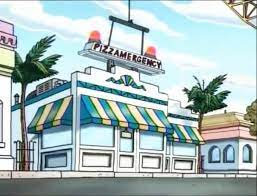
The show had numerous running gags throughout its run: the pizza place the kids hung out at had a different theme every time it’s seen (because Langdale couldn’t decide what he wanted to call it); Lor’s many brothers and her inability to recall exactly how many; Tino’s mother (Lisa Kaplan) serving questionable food-like items; Tino relaying stories about the unseen character Chloe Montez and all her antics; Tish translating for her immigrant mother (Kerri Kenney) when she ultimately mixed up words, followed by her mother affirming “Is what I say”; Tino’s mother’s seeming omniscience about his problems; and a host of others. Sometimes, school would intrude on the weekend in the form of homework or a project due on Monday.


Tish gets a makeover.

            The Weekenders premiered on February 26, 2000 as part of Disney’s One Saturday Morning programming block on ABC. The series was based on Langdale’s own childhood growing up in San Diego (many of the locations, including Tino’s house, came from Langdale’s recollections), and wasn’t even the show he planned to do. While pitching to Disney, his selection of planned-out ideas was bombing and, as a last-ditch effort, he vamped by telling stories about his childhood based on the simple written note “kids on the weekend”. Disney executives, including then-head Michael Eisner, loved the pitch and greenlit the show. However, one thing that wasn’t loved was the name The Weekenders, which someone wrote down as a placeholder name that Langdale never got around to changing.

The pizza place getting one of its many rebrandings.

Although it was a cartoon and the kids involved often overdramatized their problems and blew trying to solve them out of proportion, the show was kept fairly grounded as it dealt with issues like getting older; trying to get tickets to see their favorite band, Chum Bukket; being respectful of others’ feelings; dealing with fears; surviving the climb of the social ladder; being true to yourself; and more. Episodes typically featured two story segments, but a few presented a single story. The stories usually ended with Tino (or, occasionally, someone else) summing up the events that transpired to the audience and signing off with a “Later days”. The series was written by Langdale with Evan Gore, Heather Lombard, Brian Palermo, David Warick, Peter Gaffney, Steve Atinsky, Dan O’Connor, Rachel Powell , Sean Henry Kass, Jonathan Goldstein, and Jonahtan Rosenthal.


The cool kids. You totally wanna be like them, right?

The series’ theme was written by Wayne Brady and Roger Neill and performed by Brady. Neill handled the rest of the series’ music. Ginny Hawes and Steven Lyons served as the lead character designers, with additional designs by Brent Gordon, Bonnie Griggs and Kenny Thompkins. A unique decision was made to give the characters an actual wardrobe, which meant that in every episode they typically wore something different unlike normal characters who could go entire series in the same outfit. Lyons also directed every episode, which were animated by Wang Film Productions.

Being a good friend means sometimes doing things you don't want to do.

            The Weekenders ran for three seasons on ABC, as well as in syndicated reruns on Sundays on UPN’s Disney’s One Too programming block. The show was well-received; at one point briefly beating out Pokémon, its direct competitor, in the ratings. However, its fate was sealed as Disney had just purchased Fox Family Worldwide and would rebrand One Saturday Morning as ABC Kids in light of declining overall ratings; loading up the channel with reruns of their previous shows. In 2001, it ended its initial run and was replaced by an expanded hour of Recess, moving to Toon Disney for reruns and an abbreviated fourth and final season. 


The DVDs.

            The Weekenders ran for three seasons on ABC, as well as in syndicated reruns on Sundays on UPN’s Disney’s One Too programming block. The show was well-received, at one point beating out Pokémon, its direct competitor, in the ratings. In 2001, it ended its initial run and was replaced by an expanded hour of Recess. It began airing on Toon Disney in reruns, and it was there an abbreviated fourth and final season aired from 2002-04. In 2013, Disney made the complete series available on DVD in two volumes through the Disney Movie Club, and later offered more widely. It became the first show by Walt Disney Television Animation and from One Saturday Morning to be completely released to home video. It was also one of Disney’s shortest, clocking in at 39 episodes whereas most Disney programs tended to run until they reached 65, the number needed for syndication. It was announced in 2019 that The Weekenders would be coming to the streaming service Disney+However, it ultimately only became available in the United Kingdom.


EPISODE GUIDE:
Season 1:
“Crush Test Dummies / Grow Up” (2/26/00) – Carver thinks Lor has a crush on him. / Getting caught in a bouncy house has Tino vow to become more mature.

“Shoes of Destiny / Sense and Sensitivity” (3/4/00) – Carver gets new shoes so that he can stand with the cool kids on picture day. / Lor tries to be nice to make up for disappointing her friends.

“The Perfect Weekend / Throwing Carver” (3/11/00) – Tino’s friends bail on his plans for the perfect weekend. / Tish’s friends try to spare her feelings when she makes an ugly statue of Carver.

“Home@work / To Be or Not to Be” (3/18/00) – Lor needs help passing a test or she’ll get sent to military school. / Tish stops hanging out with her friends when they make fun of Shakespeare.

“Sitters / Band” (3/25/00) – Carver has to babysit his little brother. / Carver tells a lie that Chum Bukket will dedicate their next show to him and his friends.

“Makeover / The New Girl” (4/1/00) – Two girls give Lor a makeover when she’s asked out by Thompson. / Tish’s mom hangs out with her friends to try and become Americanized.

“Party Planning / Pudding Ball” (4/22/00) – The gang gets invited to a clown-less party. / A pudding throwing contest brings out the worst in the gang.

“Dead Ringer / Carver the Terrible” (5/6/00) – Tino tries to look cool playing horseshoes. / Carver’s perceived as a bully when he’s seen tripping Laird.

Season 2:
“Radio Drama / The Tradition” (9/9/00) – A radio contest makes Tish bossy. / Tish must study for a coming-of-age ceremony.

“To Each His Own / The Invited” (9/16/00) – Everyone wants to do something that only they like to do. / Tino and Tish get ready for a costume party Carver and Lor weren’t invited to.

“Diary / Real Fake” (9/23/00) – After accidentally reading her diary, the gang thinks Tish is moving. / The gang adopts TV character personalities when they think they’re too boring to be on film.

“Super Kids / Crevasse of Dreams” (11/4/00) – A seminar has the gang trying to do something meaningful with their weekends. / Tino is the only one who remembers a great hangout spot.

“Dixon” (11/11/00) – While the gang concerns themselves with getting tickets to an amusement park reopening, Tino worries about his mother’s upcoming date.

“Taking Sides / To Tish” (1/13/01) – Tino and Carver’s fight splits the group in half. / Tish is annoyed when her name becomes a slang term.

“Tickets / Vengeance” (1/27/01) – Tino has a hard time deciding which friend to take to the Chum Buckket concert with his extra ticket. / Carver seeks revenge when a girl tricks him at school.

“Murph / Uncool World” (2/3/01) – Tino worries that nobody likes him. / The gang helps one of the cool kids get used to being uncool.

“My Punky Valentine / Brain Envy” (2/10/01) – The gang tries to get Tino over his crush on a punk girl. / Lor gets jealous when her crush pays attention to Tish.

“Tish’s Hair / I Want to Be Alone!” (2/17/01) – The gang doesn’t want to tell Tish her new haircut is ugly. / Tish wants to spend the weekend alone and the gang wants to uncover why.

“Baskets for Bucks / Pru” (3/3/01) – Lor needs to sink three baskets to win money, and if she fails she fears she’ll lose her friends. / A popular girl makes the gang popular to get back at her friends.

“Talent Show / Relative Boredom” (3/10/01) – Lor tries out for the talent show. / Tino’s cousin is visiting when he planned to see Chum Bukket.

“New Friends / The Awful Weekend” (3/17/01) – After meeting his mom’s former best friend, Tino believes his friendships will end badly. / The gang experiences a terrible weekend.

Season 3:
“Crushin’ Roulette / Lucky Shoes” (9/9/01) – Tish feels left out not having a crush. / Carver loses his lucky shoes and his confidence.

“Cry / The Perfect Son” (9/16/01) – Tino vows to give up emotions after being teased for crying during Romeo and Juliet. / Carver gets jealous when it seems like his parents like Tino better.

“Listen Up / Never Say Diorama” (9/23/01) – Carver has trouble with their volunteer work to help kids transition to middle school. / Tish and Tino help Lor and Carver finish their diorama.

“Secret Admirer / The Lone Wolves Club” (9/30/01) – Carver tries to find out who his secret admirer is. / Tino gets invited to join a super-secret club.

 “The Most Dangerous Weekend / Charity Case” (10/7/01) – After he gets hurt, Tino becomes overly cautious and paranoid. / Tish convinces the gang to help out a girl that seems to be unpopular.

“Best / Broken” (10/14/01) – Tino tries to get labeled “Best” in the yearbook. / Tino worries how he’ll be perceived if he reminds Carver to fix the scooter he broke.

“Father’s Day / Follow the Leader” (10/21/01) – Tino wonders what to do for Father’s Day since his doesn’t live with him. / Unable to decide what to do, the group lets just one friend decide for them all.

“Careers / Tutor” (10/28/01) – The group ponders their career test results. / Lor needs a tutor to help save her grades.

“The Tao of Bluke / An Experimental Weekend” (11/4/01) – The group engages in a team challenge. / Tish wants to win a psychology prize.

“Celebrity” (11/11/01) – Carver teaches Tish how to act like a celebrity after she appears on TV.

“Clown / Testing Dixon” (11/18/01) – Tino tries to get over his coulrophobia. / Tino wants to test Dixon to see if he’d be a good stepfather.

“Croquembouche / Imperfection” (11/25/01) – The gang goes to a food festival. / Tish tries to stop being such a perfectionist.

“The Worst Holiday Ever” (12/2/01) – The gang heads to Lor’s grandmother’s farm for the holidays, but their RV gets stuck in a blizzard.

Season 4:
“Nevermore” (10/19/02) – Tino wants revenge when his friends think they’re “too old” to go trick-or-treating.

“Brain Dead / Lor’s Will” (11/7/03) – Tish gets a B on a test. / Believing her injury to be fatal, Lor writes a will—and leaves Tish out.

“Radio Free Carver / Dinner Party” (11/14/03) – Carver’s turn as a DJ ends in disaster. / Tish “invites” her friends and Bluke to a salon party.

“Laundry Day / Penny McQuarrie” (11/21/03) – Lor gets her friends to help with her family’s laundry. / Carver and Lor get involved when their siblings start dating.

“Tino’s Dad” (2/29/04) – Tino plans the perfect weekend to bond with his dad, who finally comes for a visit.

Originally posted in 2017. Updated in 2023.

ONE SATURDAY, 20 YEARS

            In 1995, Disney had purchased their own television network: ABC. They were looking to revitalize a lot of the network's programming with original productions, particularly on Saturday mornings. Fortunately for them, Peter Hastings had recently left Warner Bros. Animation after being frustrated by the new management’s meddling in the programs he worked on. 


            Disney hired Hastings to revamp their Saturday line-up, and he came up with the concept of Disney’s One Saturday Morning. He visualized the days of the week as buildings, with Saturdays being represented by a steampunk building and large cartoon number one. He pushed for live-action hosting segments throughout the block and the use of virtual sets--a technology that was in its infancy at the time and which he knew little about. For that reason, he took on Prudence Fenton as a consulting manager and together they settled on the technology of Accom ELSET to bring the sets designed by Fenton to life.

Most of the block's line-up.

            One Saturday Morning was broken up into two parts. One part was the actual programs airing during the block. The initial line-up featured 101 Dalmations: The Series, Recess, Pepper Ann, the newly-acquired Doug, The Bugs Bunny and Tweety Show (the only non-Disney series to be carried over from the old ABC line-up) and Schoolhouse Rock! The second part was a series of interstitial segments that was shown between the shows and the commercial breaks. The whole thing would be hosted in wraparound segments by at first a woman named Charlie (Jessica Prunell), and later MeMe (Valarie Rae Miller), with the help of an elephant named Jelly Roll (Brad Garrett). To further emphasize the block’s educational content in compliance with FCC mandates, a CGI lightbulb would appear with an announcer saying “Illuminating television” before being clicked on and leaving the screen in a variety of manners (such as blasting off like a rocket ship or exploding into fireworks).

Manny on the scene.

            The block’s segments included: Manny the Uncanny, which had Manny (Paul Rugg) visit and learn about an unusual job; Great Minds Think For Themselves, where Aladdin’s Genie (Robin Williams) would talk about famous figures that went against conventional wisdom; How Things Werk, which explained American engineering in a 1950s comic book style; Mrs. Munger’s Class, which was performed with a syncro-voxed page from an actual elementary school yearbook and had the people pictured interacting with each other within their photo borders (sometimes leaving them and disappearing off the page); Find Out Why!, which had the Lion King’s Timon (Quinton Flynn) and Pumbaa (Ernie Sabella) answering scientific questions; The Monkey Boys, where Buddy & Hodge-Podge silently acted out a different job; and Tube Dwellers, which featured workers that lived inside viewers’ televisions and were responsible for keeping the show running. Because permission wasn’t granted for the likenesses used in the Mrs. Munger segment, some of the people featured filed suit against Disney. It was settled out of court and the segment was replaced by the similar segment Centerville, which was set outside a school setting.

Print ad.

            The block made its debut on September 13, 1997. Originally, it was intended to begin on September 6 but was delayed when the networks simulcasted the funeral of Princess Diana of Wales, who was killed in a car crash the week prior. Despite the heavy infusion of educational content, the block and its various programs were a success due to their strong writing. In 1999, a spin-off block, Disney’s One Too, began airing on UPN as part of a time-lease agreement with Disney. It showed reruns of the One Saturday shows either on Sunday mornings on during the week.


            By 2000, however, the ratings began to decline. The shorts and live-action segments were dropped in favor of simple commercial bumpers and program promotions. In 2001, a sub-block called “Zoog Hour” (taken from Disney Channel’s weekend programming block’s name, “Zoog Disney”) was added to show live-action Disney Channel original sitcoms Lizzie McGuire and Even Stevens. Following Disney purchasing assets from Fox Family Worldwide, they decided to rebrand their Saturday morning block in 2002. It was called ABC Kids after their acquired Fox Kids brand.


            Despite the block’s overall short run, it had a lasting impression on the fans of its programs. As 2017 marks the 20th anniversary of the debut of the block, we’re going to take a look at some of the shows that made it what it was.