August 22, 2015

SHIRT TALES

SHIRT TALES
(NBC, September 8, 1982-January 30, 1984)


Hanna-Barbera Productions

MAIN CAST:
Ronnie Schell – Rick Raccoon
Steve Schatzberg – Tyg Tiger, Rick Racooon (1 episode)
Patricia Parris – Pammy Panda
Bob Ogle – Digger Mole
Fred Travalena – Bogey Orangutan
Herb Vigran – Mr. Dinkel
Bill Woodson – Commissioner (season 1)
Nancy Cartwright – Kip Kangaroo (season 2)


Shirt Tales greeting cards.

            Designer Janet Elizabeth Manco came up with the idea for a series of greeting cards for Hallmark. The cards would feature cute little animals all wearing shirts that would display some kind of message. Debuting in 1980, the cards quickly became one of Hallmark’s best sellers. Looking to expand their brand, Hallmark partnered with Hanna-Barbera Productions to create Shirt Tales.

The Shirt Tales: Rick, Tyg, Digger, Pammy and Bogey.

            The Shit Tales were a team of secret heroes that resided in Oak Tree Park, named for the giant tree that also served as their base of operations, under the stewardship of park superintendent, Mr. Dinkel (Herb Vigran). Although the world knew about the existence of the Shirt Tales, very few outside of select animals knew their true identities.  The team was comprised of Rick Raccoon (Ronnie Schell), the de-facto leader and music aficionado; Tyg Tiger (Steve Schatzberg using a Brooklyn accent), a physical fitness nut who tended to zoom off with a “DOING!” that left his stripes behind; Pammy Panda (Patricia Parris), originally the sole female member of the group and an accomplished athlete; Digger Mole (credited as “Mole” in the opening and voiced by Bob Ogle, who also served as a writer and story editor), whose tunnels often ended up a bit off course and tended to be a bit of a cowardly screw-up at times; and Bogey Orangutan (Fred Travalena, doing an impression of Humphrey Bogart to match the name), the banana-loving laid-back member of the team who constantly called everyone “sweetheart.” While the main team was the focus of the show, there were many other Shirt Tale “cousins” located around the world who sometimes assisted them on cases, showcasing the other characters that often appeared on the cards.

The Shirt Tales broadcasting their names on their shirts.

            What made the Shirt Tales unique were the shirts that they wore. In a nod to the cards, each one had the ability to display various phrases or symbols on them (sometimes misspelled). They would be exclamations or reaffirmations of what the character was saying, and at times the team could coordinate what their shirts said for a singular message. Like the cards, the characters’ shirts would sometimes feature little “ST” tags hanging down from their bottoms; however inconsistent animation meant they weren’t seen often.

The Shirt Tales in the STSST.

            When not doing chores around the park for Dinkel (who often liked to act as if he was a military commander), the team would respond to an emergency typically from a summons by the Commissioner (whom one would assume is the police commissioner but also appeared as the park commissioner, voiced by Bill Woodson) through their large computer (alternating between a screen and a holographic display in various episodes). The team would then take to their all-purpose vehicle, the Shirt Tales Super Sonic Transport (or STSST), and exit the park through any one of their various tunnels. Dinkel not only didn’t know about their double lives but also forbade them from ever leaving the park, necessitating their covert departures. Among the team’s other common equipment were wrist communicators (which would only be visible when used) that allowed them to talk to each other or the Commissioner, sometimes with their own holographic display.


            Shirt Tales debuted on NBC on September 18, 1982 with thirteen episodes divided into two segments each. When the series proved a success, it was renewed for a second season of 10 episodes. Writers for the show included Ted Anasti, Tom Dagenais, Jim Ryan, Gary M. Stamm, John Bates, Alan Burnett, David Detiege, Dan DiStefano, Cynthia Friedlob, Glenn Leopold, Cliff Roberts, Jeff Segal and John Semper. The music was composed by Hoyt Curtin and Paul DeKorte.

Kip joins the Shirt Tales for Shirt Tale Time.

With the new season came several changes. The team gained a new member, a young and energetic female kangaroo named Kip (Nancy Cartwright). Kip was integrated into a new opening title sequence with the characters now singing lyrics over the theme music, and she was added to the character images in the new closing credits sequence. However, the show still employed the original episode title cards without Kip. The Commissioner was dropped from the show, and the team was not so much alerted to trouble as they more stumbled upon it. Rick’s role in the show was drastically reduced, sometimes to the point where he didn’t appear at all. Tyg assumed the leadership role more often as a result. Their shirts also gained a new feature: they all turned red when someone would exclaim “It’s Shirt Tale time!” and the team went into hero mode (the actual purpose of this was never explained). 

Bogey model sheet.

            By the time of the season’s conclusion, the popularity and novelty of the franchise began to wane. CBS acquired the rights to the show and aired reruns from both seasons during their Saturday morning line-up, replacing The Biskitts until March 23, 1985 when The Biskitts returned. The Hallmark card series ended shortly after that. Reruns again ran as part of USA Cartoon Express, on Cartoon Network and on Boomerang. 

Rick's shirt stating the obvious.

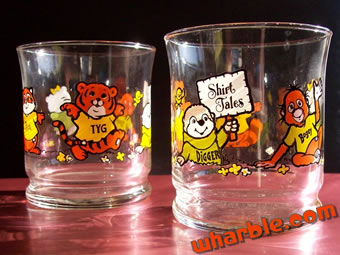
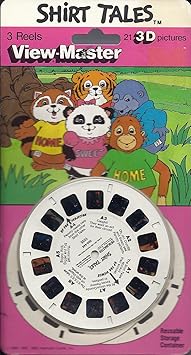
            Along with the animated series, Hallmark invested in a whole line of merchandise featuring the Shirt Tales characters to complement their greeting cards and the show itself.  Amongst them were lunchboxes, drinking glasses, stamps as both figurines and standard, View-Master reels, bedsheets, Halloween costume patterns by Simplicity, a metal spinning top, a Milton Bradley board game and card game, a Timex watch, Ertl die-cast cars sold individually and as a set, a record player by Vanity Fair, an Avalon paint-by-numbers set and paintable figures, Golden Books coloring books and story books, Galoob wind-up toys, figurines and a playset by LJN and plush dolls. K-tel International released two musical book-and-record sets under their Castle Rock imprint featuring sound-alikes in the roles. In the early 2010s, Hallmark would release an all-new set of large and small plush dolls of the characters and a 300 piece puzzle.

DVD cover.

            Worldvision Home Video released the first episode of the second season onto VHS in 1986. In 2014, Warner Archive released the complete series on DVD as part of their Hanna-Barbera Classics Collection.


EPISODE GUIDE:
Season 1:
“The Case of the Golden Armor / Crumbling’s Circus Caper” (11/28/82) – In the middle of a gold crime wave, the Shirt Tales are called upon to find a stolen suit of armor. / Pammy is kidnapped and forced to perform in a circus.

“The Game Masters / Shirt Napped” (12/4/82) – A trip to the arcade leads the team to being zapped into one of the machines by the Game Master. / The team is abducted to an alien planet in order to perform slave labor for the citizens there.

“The Big Foot Incident / Elephant on the Loose” (12/11/82) – A hypnotist captures Bigfoot and uses him to rob gold reserves. / The team has to help a lost elephant evade capture and get to the park where he belongs.

“Horsin’ Around / Mission Mutt” (12/18/82) – The team tries to help retiring carriage horse Clarence achieve his dream of being a race horse. / The team has to rescue a runaway dog from the dog catcher.

“Vacation for Dinkel / Wingman” (12/25/82) – The team follows Dinkel on vacation to make sure he gets plenty of rest and relaxation. / A crook uses a whistle to control crows and have them steal valuable jewels for him.

“The Humboldt Ghost / Figby, the Spoiled Brat Cat” (1/1/83) – The team is called in to investigate the haunting of Humboldt Mansion. / The team is roped by Dinkel into watching the park commissioner’s pesky kitten.

“Digger Runs Away / The Commissioner is Missing” (1/8/83) – Believing he’s nothing but a screw-up, Digger leaves the park. / Master Mind kidnaps the commissioner to lure the Shirt Tales into a trap as revenge for his incarceration.

“Raiders of the Lost Shark / The Terrible Termites” (1/15/83) – A shark-shaped submarine pilfers oil from tankers in the bay. / A swarm of ravenous termites make their way to the park and the team has to protect their tree.

“Moving Time / Back to Nature” (1/22/83) – When their friend Nancy wants to live in the park because her family is movie, the team tries to help her deal with the change. / When his friend bails on their camping trip, Dinkel takes the team along.

“Save the Park / Pam-Dora’s Box” (1/29/83) – The team tries to convince a rich miser not to level the park and replace it with a skyscraper. / Pammy goes to visit the panda donated to the city zoo only to learn he’s a sinister robotic thief.

“Hapless Hound / The Very Buried Treasure” (2/6/83) – The team tries to help a lost dog find a new home. / Two crooks try to find a buried treasure in the park.

“Nearsighted Bear / The Magical Musical Caper” (2/13/83) – A circus bear refuses to wear his glasses, getting into all sorts of trouble. / The team has to retrieve the box office receipts of Rick’s favorite band, the Patriots.

“Dinkel’s Ark / The Duke of Dinkel” (2/20/83) – The team builds an ark to deal with a flash flood in the city. / For Good Deed Day, the team decides to treat Dinkel as a king, which leads to him losing his memory and really believing he is a king.

Season 2:
“Bogey Goes Ape / The Rain, the Park and the Robot” (11/14/83) – Bogey follows around his favorite orangutan movie star as she’s targeted by two crooks. / Pammy invents a screwy robot to help them clean the park who tries to save Kip when she ventures out in a storm.

“Digger’s Three Wishes / Digger’s Double” (11/21/83) – Digger ends up with a genie who turns out to be a crook. / When Digger goes to visit his aunt, a cheese-stealing rat hides out in the tree and takes his place.

“Kip’s Dragon / Double Exposure” (11/28/83) – Kip befriends a dragon and helps him learn to act like one. / Pammy’s new camera gets switched with one that can steal the objects it photographs.

“Taj Mahal Tyg / Brass Bogey” (12/5/83) – The team volunteers to find the prince’s lost tiger, or else Tyg will end up its permanent replacement. / The team accidentally lands on the retirement home of Mysto the Magician and get an unpleasant welcome.

“The Outer Space Connection / The Forbidden Island” (12/12/83) – Dinkel, Kip and Bogey visit a space launch and end up trapped inside the ship. / A parrot brings the team to Mora Mora to rescue his partner from a fire god.

“Saturday Night Shirt Tales / Dinkel’s Buddy” (12/19/83) – A crooked DJ is planning to crash the disco party Dinkel is attending. / The team follows Dinekl as he goes out to search for his missing friend.

“Pleasure Valley / The Ghost Out West” (1/9/84) – A crooked carnival owner forces the STSST to land in order to enslave the team. / The team goes to a ghost town for a vacation where a crooked prospector tries to scare them off and away from his unfound claim.

“T.J.’s Visit / The Big Set-Up” (1/16/84) – Tyg’s nephew comes for a visit, and where he goes disaster follows. / The team has to help Dinkel get ready for his date when he exaggerates on his application to the dating service.

“Kip’s Toy Caper / Dinkel’s Gift” (1/23/84) – Kip and Bogey investigate a robotic bear helping a crook rob toy stores. / The team tries to hide a surprise birthday party from Dinkel while Pammy and Bogey end up accidentally switching his gift briefcase with that of a spy’s.

“Mayhem on the Orient Express / The Cuckoo Count Caper” (1/30/84) – A crook collects trains—real ones. / The team’s ski vacation is interrupted when a crazy clockmaker seeks to put them inside his newest cuckoo clocks.


Originally posted in 2015. Updated in 2020.

DYNOMUTT, DOG WONDER

DYNOMUTT, DOG WONDER
(ABC, September 11, 1976-October 29, 1977)


Hanna-Barbera Productions


MAIN CAST:
Gary Owens – The Blue Falcon/Radley Owens
Ron Feinberg – Narrator, F.O.C.U.S. One, Mudmouth, Worm
Larry McCormick – Mayor Gaunt


The Blue Falcon and Dynomutt, Dog Wonder.


            Created by Joe Ruby and Ken Spears for Hanna-Barbera Productions, the series was a parody of DC Comics’ Batman and Robin. It focused on the bumbling robotic dog, Dynomutt (Frank Welker, taking inspiration from the Red Skelton characters of Gertrude and Heathcliff), who could pull any kind of device from his robotic body. His straight man and partner was the Blue Falcon (Gary Owens), aka millionaire socialite art dealer Radley Crown. Together they protected Big City when they received a trouble alert from the headquarters of secret agent F.O.C.U.S. One (Ron Feinberg) via their Falcon Flash. They would abscond to the Falcon Lair located inside Crown’s penthouse to change into their outfits and depart in the Falcon Car. Unfortunately, protecting the city was often made more difficult when Dynomutt’s gadgets backfired; putting the heroes at the villains’ mercy (at least until after the commercial break).

A coloring book based on the hour.

            Dynomutt began on ABC on September 11, 1976. The first season aired on as part of The Scooby-Doo/Dynomutt Hour alongside The Scooby-Doo Show. As a result, the Mystery, Inc. gang often crossed over with Dynomutt to help solve mysteries. The series particularly gained notoriety for being the first Saturday morning cartoon to depict an African-American public official in Mayor Gaunt (Larry McCormick). Many of the concept designs were done by Alex Toth. The series was written by Jeffrey Scott, Haskell Barkin, Earle Doud, Donald F. Glut, Orville H. Hampton, Michael Muarer, Lee Orgel, Dalton Sandifer and Deirdre Starlight with music by Hoyt Curtin.

Blue Falcon, Dynomutt and their identities model sheet.

The following season, the show was rerun as part of the Scooby’s All-Star Laff-A-Lympics programming block. Four new stories, broken up into 8 episodes, were aired as part of the block amongst the original 16 under the title The Blue Falcon & Dynomutt. Blue Falcon and Dynomutt also appeared as regular characters in the Laff-A-Lympics portion of the block as members of Scooby-Doo’s team, The Scooby-Doobies. In 1978, the series broke out on its own in syndicated reruns as Dynomutt, Dog Wonder before being paired up with Godzilla in The Godzilla/Dynomutt Hour in 1980. 

Blue Falcon on Dexter's Laboratory.

After years of inactivity, Blue Falcon and Dynomott appeared in the Dexter’s Laboratory episode “Dyno-Might” while Dynomutt cameoed as a picture in the “Agent Penny” episode of the Super Secret Secret Squirrel segment of 2 Stupid Dogs. Blue Falcon guest starred in the Johnny Bravo episode “Johnny Makeover,” helping to revamp Johnny’s show alongside “Weird Al” Yankovic and Don Knotts. Blue Falcon was reimagined as Spanish lawyer Azul Falcone (Maurice LaMarche) for Harvey Birdman, Attorney at Law while Dynomutt would appear in the episode “Deadomutt” with a Spanish accent provided by Andre Sogliuzzo. Victor Yerrid and Kevin Shinick would assume the roles for the Robot Chicken episode “Ban on the Fun.” 


Blue Falcon and Dynomutt reunite with Scooby-Doo on Mystery Incorporated.

The characters would reunite with the Scooby gang in the Scooby-Doo! Mystery Incorporated episode “Ban on the Fun,” where series star Welker reprised his role, but Blue Falcon was given a grim and gritty portrayal reminiscent of Frank Miller’s The Dark Knight Returns take on Batman, voiced by Troy Baker. In 2012, that theme was revisited when the Scooby gang got involved in a mystery surrounding a gritty reboot of the Blue Falcon film franchise in the direct-to-video movie Scooby-Doo! Mask of the Blue Falcon. Blue Falcon was represented by the “actors” that played him: the new one, Brad Adams (Diedrich Bader), and the original, Owen Garrison (named for Gary Owens and voiced by Jeff Bennett). Scooby spent a good portion of the film dressed up as Dynomutt. Another team-up occurred when Blue Falcon and Dynomutt were featured as central characters in the 2020 CGI film, Scoob!; this time voiced by Mark Wahlberg and Ken Jeong, respectively.


The variant cover for Super Sons/Dynomutt Special #1.

In 1977, Marvel Comics published a six-issue Dynomutt comic series. They also appeared in Marvel’s 1978 Laff-A-Lympics series and the related issue of Funtastic World of Hanna-Barbera. In 1999, Blue Falcon and Dynomutt were featured in the 21st issue of Cartoon Network Presents by DC Comics. In 2018, the pair returned to comics in Super Sons/Dynomutt Special #1 by Peter Tomasi and Fernando Pasarin as part of the second wave of Hanna-Barbera crossover one-shots, which finally gave an origin to Dynomutt’s robotics. 

The DVD cover.

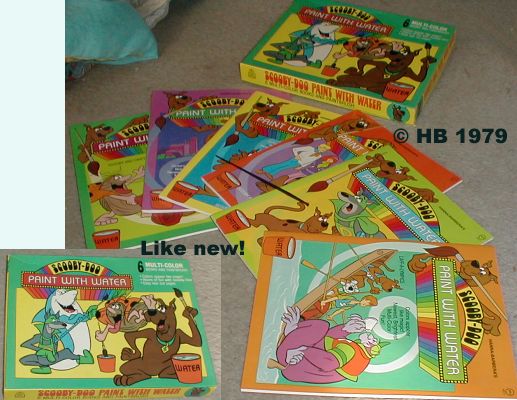
Also in 1977, Milton Bradley produced a board game based on the series while Rand McNally published a series of coloring books, sometimes pairing the characters up with Scooby-Doo. Dynomutt was also a featured character on the Scooby-Doo watercolor paint set in 1979. In 2003, Toynami produced an action figure box set for the characters and two small figures as part of their Hanna-Barbera Adventure Superstars line, as well as two maquettes that linked up by their bases to form a single statue. In 2006, Warner Bros. Home Video released the complete Scooby-Doo/Dynomutt Hour on DVD as part of their Hanna-Barbera Classics Collection, featuring the original 16 episodes of Dynomutt. The Final eight have yet to see release.


EPISODE GUIDE:
Season 1:
“Everyone Hyde!” (9/11/76) – Mystery, Inc. helps the heroes take down Willie the Weasel, who has turned himself into Mr. Hyde.

“What Now, Lowbrow?” (9/18/76) – Lowbrow wants to become the king of crime, but the heroes and Mystery, Inc. stand in his way.

“The Great Brain…Train Robbery” (9/25/76) – The Gimmick dares the police to stop him from stealing a train car inhabited by a prince.

“The Day and Night Crawler” (10/2/76) – The Worm and Grub use a digging machine to bust Bugsy Busby and Roto Chopper from prison to help them steal a super computer.

“The Harbor Robber” (10/9/76) – Fishface plans to steal and ransom the city’s oil supply.

“Sinister Symphony” (10/16/76) – Manyfaces tricks Dynomutt into arresting his allies.

“Don’t Bug Superthug” (10/23/76) – Superthug and Zorkon use a super steel skeleton to steal the city’s steel supply to mass-produce an army of skeletons.

“Factory Recall” (10/30/76) – Mr. Cool finds Falcon’s lost communicator and uses it to dispose of the heroes.

“The Queen Hornet” (11/6/76) – The heroes investigate Queen Hornet in order to find the evidence that will put her away.

“The Wizard of Ooze” (11/13/76) – Swamp Rat and Mudmouth plan to flood the city, but the heroes team-up with Mystery, Inc. to stop them.

“Tin Kong” (11/20/76) – Eric von Flick plans to use his robotic creation to destroy Big City for his next motion picture.

“The Awful Ordeal with the Head of Steel” (11/25/76) – Ironface seeks revenge on Big City by capturing all its champions of justice.

“The Blue Falcon vs. the Red Vulture” (11/27/76) – The Red Vulture steals the most powerful jet-engines for his Vulturuejet in order to rule the air.

“The Injustice League of America” (12/4/76) – Fishface, Gimmick, Lowbrow, Queen Hornet, Superthug and Worm escape from prison and team-up.

“Lighter Than Air Raid” (12/11/76) – Blimp steals the city’s supply of helium.

“The Prophet Profits” (12/18/76) – The Prophet scams Mayor Gaunt into paying him for his predictions of disasters Prophet set up himself.

Season 2:
“Beastwoman Part 1” (9/10/77) – Beastwoman uses her Beast Whistle to have all the animals in the zoo drive the people out of the city, and even manages to control Dynomutt.

“Beastwoman Part 2” (9/17/77) – Falcon frees Dynomutt from Beastwoman’s control and prevent her from turning the country into a jungle.

“The Glob Part 1” (9/24/77) – Norbert Prindle becomes the Glob and steals the Baltese Falcon. The heroes give chase and end up subjected to the same process that created the Glob.

“The Glob Part 2” (10/1/77) – Dynomutt sculpts Falcon back to normal and they use Falcon’s Instant Hardening Spray to defeat the Glob.

“Madame Ape Face Part 1” (10/8/77) – Madame Ape Face steals and plans to sell the faces of the starlets of the city.

“Madame Ape Face Part 2” (10/15/77) – Dynomutt goes undercover to capture Madame Ape Face and ends up losing his own face.

“Shadowman Part 1” (10/22/77) – Shadowman knows all of the plans of the Crime Commission and makes off with a diamond, money plates and gold, framing Mayor Gaunt in the process.

“Shadowman Part 2” (10/29/77) – The heroes attempt to prove Mayor Gaunt’s innocence and capture Shadowman, who turns out to be the corrupt Crime Consultant.


Originally posted in 2015. Updated in 2020.

August 15, 2015

DROOPY, MASTER DETECTIVE

DROOPY, MASTER DETECTIVE
(FOX, October 2, 1993-January 1, 1994)


Hanna-Barbera Productions, Tuner Entertainment


             With Ted Turner’s acquisition of the Metro-Goldwyn-Mayer and United Artists libraries, and Tom and Jerry performing well on his networks, it was decided to revive Tom and Jerry for a new generation with Tom and Jerry Kids. It became one of the inaugural programs for the all-new Fox Kids programming block and proved a success for the fledgling FOX network. The series ended up earning four seasons and a spin-off starring their co-stars; banking on his recent resurgence in the film Who Framed Roger Rabbit and its follow-up theatrical shorts.

Droopy and Dripple on the case.

             Droopy, Master Detective was a spoof on detective films and cop shows with a faux film noir style. It focused on the Tex Avery-created character Droopy (Don Messick) and his son, Dripple (Charlie Adler), as detectives. They worked on various cases from thefts to kidnappings to protecting the rich and famous in various time periods. Like many other Hanna-Barbera productions, the series was broken up into three story segments per episode. The first and last segment usually featured a Droopy adventure both with and without Dripple as he faced off against his eternal enemy, McWolf (Frank Welker). As Droopy’s role and time period changed, so too did McWolf’s profession; ranging from a rival detective to a disgruntled superhero.


Screwball with Rumpley and Dweeble.

             The second segment usually centered around another Tex Avery creation: Screwball Squirrel. Screwball first appeared in the 1944 short Screwball Squirrel Avery made during his tenure at MGM. Voiced by Wally Maher, Screwball was brash and erratic and took cartoon physics to the extreme; pulling objects out of thin air, creating duplicates of himself, breaking the fourth wall and so forth. Screwball usually spent his time torturing his enemy, typically portrayed by Meathead Dog (Dick Nelson). Screwy did not fare as well as Droopy with audiences, generally perceived to be an unsympathetic and annoying character. Avery seemingly killed Screwball in his fifth short, 1946’s Lonesome Lenny, and never used him again.

Screwball comin' at ya!


               Screwy resurfaced in cameo form and a mention in 1988’s Who Framed Roger Rabbit (which also featured Droopy), and served as the basis for both the characters of Slappy Squirrel on Animaniacs and Sledgehammer O’Possum from Cartoon Network’s What a Cartoon. Screwball (voiced by Adler) was revived for Master Detective and was given new rivals in the form of Dweeble (Welker) and his dog, Rumpley (William Callaway). Dweeble was the attendant of the park where Screwball had taken residence and refused to leave. Screwball was seen frequently in a t-shirt and Napoleon hat.

Title card from the sole Wild Mouse segment.

             Three of the segments were populated by other characters from Kids. One segment featured Wild Mouse (Welker), a savage mouse raised in the wild by wolves similar in personality to Warner Bros.’ Tasmanian Devil, being hunted. The remaining two featured the character of Lightning Bolt the Super Squirrel (Adler), a campy and flamboyant superhero that could fling lightning bolts.

Droopy and Dripple on McWolf's case.

             Droopy, Master Detective debuted on FOX on October 2, 1993 and replaced its parent series on the Saturday morning schedule the following week. The series was written by Jim Ryan, Sandy Fries, Don Jurwich, Arthur Alsberg, Don Nelson, Bruce Morris, Stewart St. John, Carl Swenson and Jerry Eisenberg. Jurwich and Neal Barbera served as story editors, with Jurwich also producing. Character designs were handled by Eisenberg, Mark Christiansen, Eric Clark, Judith Holmes Clarke, David Mucci Fassett, Jim Franzen, Michael Gougen, Scott Hill, Brain Hogan, Leonard Johnson, Marcus Nickerson, Lew Ott, Robert Sledge, Mitchell Walker Jr., Butch Hartman, Bob Singer, Bwana Takamoto, Rick Calabash (as Rick Schneider), Peter Alvarado, Lance Falk, Tony Sgroi, Denise Shimabukuro, Jim Stenstrum, Donna Zeller, and Iwao Takamoto. Gary Lionelli composed the series’ score and theme, with producer Joseph Barbera writing the theme’s lyrics. Animation was handled by Fil-Cartoons, Inc. and Mr. Big Cartoons.

Dweeble taking drastic measures to get Screwball.


               Unfortunately, Droopy found itself up against both Garfield and Friends and Sonic the Hedgehog on the schedule, which resulted in lower ratings than hoped. FOX ended up not renewing Droopy for another season; having also allowed Tom and Jerry Kids to conclude. While Fox Kids needed to rely on acquired programming for its debut, once it got its footing it began focusing more on productions made in-house that they had a larger financial stake in and no longer needed those kinds of programs to carry them. Droopy would end up dropped from the schedule in January of 1994, however it would return that summer for several weeks of reruns.

Droopy and Dripple moonlighting as firefighters.


            During the show’s production, Turner Broadcasting System would buy Hanna-Barbera and Ruby-Spears Enterprises from Great American Broadcasting (formerly Taft Broadcasting), gaining access to the studios’ libraries and turning Hanna-Barbera into its own in-house production studio. To showcase their animation library, Turner would launch Cartoon Network; a 24-hour cable channel dedicated solely to cartoons. Not only was Droopy the first character seen on the network to welcome viewers, but Master Detective would make its way over there in 1997; airing until 2001. The series would be made available on the Boomerang streaming service in 2017 until it was shut down in 2024. As of 2023, it was available on the iTunes store/Apple TV app. A single episode aired on retro animation network MeTV Toons on June 13th, 2026, as part of the Paws for Applause marathon.

On the case.


            While Droopy would return to Saturday mornings in Tom and Jerry Tales, Screwball faded again into relative obscurity. However, in 1996, Dark Horse Comics published Comics and Stories which featured Screwball. In 1997, Cartoon Network ran an edited version of the short Happy-Go-Nutty (removing a blackface gag) repeatedly for 12 hours as an April Fool’s prank, while sister station Boomerang would feature him in their station identification segments after 2005. In 2013, Screwy (Paul Reubens) and Meathead (John DiMaggio) appeared in the film Tom and Jerry’s Giant Adventure along with Droopy (Joe  Alaskey).


EPISODE GUIDE:
“Queen of the Mutant Weirdo Vampires / Screwball Snowballs / Shadowman and the Blue Pigeon” (10/2/93) – Droopy and Dripple protect a horror movie actress. / Screwball uses snowballs to torment Dweebie and Rumpley. / Droopy and Dripple team up with a superhero to protect a gem from a criminal.
 
“Droopy and the Cyberdolts / Pickax Max / Hey! Where’s Armold?” (10/9/93) – Droopy investigates a gang of robots in the future. / Screwball protects his park from a prospector. / Droopy and Dripple must find the Raj’s pet elephant.
 
“Return of the Yolker / A Chip off the Old Blockhead / Mighty McWolf” (10/16/93) – The Yolker goes after a priceless egg. / Rumpley coaches Dweebie on catching Screwball. / A former hero goes berserk.
 
“Deep Swamp Droopy / Dog Breath Dweebie / Hogswild” (10/23/93) – Droopy and Dripple participate in a riverboat race against McWolf. / Dweebie recounts the exploits of his pirate ancestor. / Lightningbolt and Super Squirrel face off against a pig motorcycle gang.
 
“Primeval Prey / Dweebie’s Worst Nightmare / Battle of the Super Squirrels” (10/30/93) – An explorer pursues Wildmouse. / Screwball plagues Dweebie’s dreams. / Lightningbolt competest with Thundergut to see who’s the best hero.
 
“The Babyman Bank Heists / Dweebie’s Night Out / The Deep Space Case” (11/6/93) – Droopy and Dripple are after a baby-faced crook. / Screwball keeps Dweebie up after a wild night out. / Droopy and Dripple are hired by an alien girl.
 
“The Monster Mob / Everybody Out / Sherlock Droopy” (11/13/93) – A mobster seeks helps from monsters to evade Droopy. / Dweebie and Rumpley try to get rid of Screwball. / Sherlock Droopy goes against his arch-nemesis Professor Wolfiarty.
 
“Dueling Detectives / Squirrelicious Obnoxiousness / Sherlock Droopy Gets Hounded” (11/20/93) – Droopy and Private Eye McWolf compete to see who solves a case first. / Screwball uses his new designation as an endangered species to his advantage. / Sherlock Droopy goes against the Baskerton Hound.
 
“Auntie Snoopie / Demolition Disorder / Mushu McWolf” (11/27/93) – Droopy gets a visit from his overprotective aunt. / Dweebie and Rumpley team-up with Screwball to save the park. / Droopy goes after a kung-fu criminal.
 
“Sheep Thrills / Screwball Out West / The Maltese Fossil” (12/4/93) – Droopy and Dripple are hired to guard a flock of sheep. / Screwball follows Dweebie and Rumpley on their dude ranch vacation. / Prehistoric Droopy defends a rare dinosaur skeleton from a crook.
 
“The Case of Pierre le Poulet / Commotion on the Ocean / Alligator Droopy” (12/11/93) – Droopy goes after an art thief. / Screwball follows Dweebie and Rumpley on a cruise. / Droopy and Dripple investigate the disappearance of wallabys.
 
“Droopy’s Deep Sea Mystery / Can We Miss You If You Don’t Go Away? / Droopy and the Case of the Missing Dragon” (12/18/93) – Droopy and Dripple aid a mermaid. / Dweebie and Rumpley try to trick Screwball out of the park. / Droopy and Dripple investigate a missing jade dragon.
 
“Round ‘Em Up, Bub / A Screwball Romance / The Case of the Snooty Star” (1/1/94) – Wild West Droopy and Dripple face off against Mad Dog McWolf. / Screwball helps Rumpley with his girl troubles. / Droopy and Dripple guard a snobby actress.


Originally posted in 2015. Updated in 2026.