Millennials! We're getting real now. Continuing our anniversary celebration with the shows turning 35 and 40.


Remember that one day when you could wake up without an alarm? When you would get your favorite bowl of cereal and sit between the hours of 8 and 12? This is a blog dedicated to the greatest time of our childhood: Saturday mornings. The television programs you watched, the memories attached to them, and maybe introducing you to something you didn't realize existed. Updated every weekend.
Millennials! We're getting real now. Continuing our anniversary celebration with the shows turning 35 and 40.

You can read the full story here.
Best known for his role in ALF, he played Andy in an episode of Pound Puppies (1987) and Biff Tannen Jr. and additional voices for Back to the Future: The Animated Series.


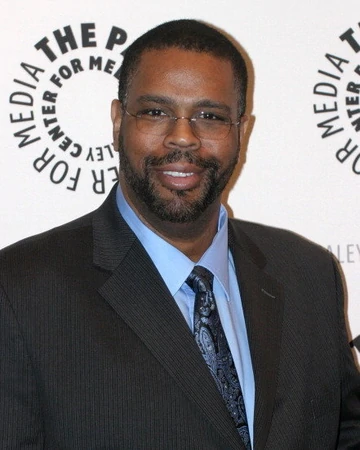
DWAYNE
McDUFFIE
(February
20, 1962-February 21, 2011)
Notable
Roles: Producer, writer, editor
A
Michigan native, McDuffie graduated the Roeper
School and the University of Michigan
before moving to New York to attend New York
University’s Tisch School of the Arts.
After working as a copy editor at Investment Dealer’s
Digest, McDuffie went on to work for Marvel
Comics as assistant to editor Bob
Budiansky. There, he helped develop the company’s first superhero trading
cards set before getting his first major writing work published in the pages of
Damage
Control. After becoming an editor, he submitted a spoof proposal for a
series called Teenage Negro
Ninja Thrashers after becoming dissatisfied with the number and
treatment of Marvel’s Black characters. Going freelance in 1990, McDuffie
continued to write for Marvel alongside DC
Comics, Archie Comics and Harvey Comics, where he
wrote the comic spin-off of the Back
to the Future cartoon. Along
with Denys Cowan, Michael
Davis, Derek
T. Dingle and Christopher
Priest (who left in the early planning stages for personal reasons), he
founded Milestone Media to bring the
multicultural sensibility they felt missing from comic books. They debuted
Milestone Comics in 1993, published through DC Comics, that introduced the
interconnected “Dakotaverse”,
named for the fictional city of Dakota
where most of their stories were set. Populating it were the African-American Static, Icon and Hardware; the
Asian-American Xombi;
and the group Blood
Syndicate comprised of various ethnicities. A victim of both the comic bust
and near-sighted retailer perception, Milestone ceased operations in 1997 and
became primarily a licensing company. Static was adapted
into the animated series Static
Shock, on which McDuffie served as story editor and wrote 11 episodes.
He also wrote for Teen
Titans and What’s
New, Scooby-Doo? while serving as a staff writer on Justice League;
where he was later promoted to story editor and producer when the series became
Justice League
Unlimited. Additionally, he wrote the story for the video game Justice League Heroes and
several direct-to-DVD DC animated movies. Along with returning to comic work
with Beyond!,
Fantastic
Four vol. 1, and Justice
League of America vol. 2,
McDuffie was hired to revamp and story edit the Ben 10 franchise for Cartoon Network, resulting in Alien Force and Ultimate Alien. During
his career, he was nominated for several Eisner
Awards, Daytime Emmy Awards, and
won a Golden Apple
Award, The Humanitas Prize,
an Inkpot Award, and a Writers Guild of America Award, as well as
voted Favorite Breakout Talent in Wizard
Magazine’s Fan Awards. In 2011,
McDuffie died of complications from emergency heart surgery. Several tributes
came after his death: Justice
League: Doom, Ultimate Alien’s final episode and the spin-off video game were
dedicated to his memory; a diner named “McDuffie’s” appeared in Green
Lantern: The Animated Series; Ultimate Spider-Man introduced
the new CEO of Damage
Control named “Mac” with a dedication in the same episode; the 2011 Static
Shock comic reboot had the titular character attending a high school
named for McDuffie; new DC Comics character and brief TV star Naomi was
given the last name “McDuffie”; and the Dwayne
McDuffie Award for Diversity and Comics and The
Dwayne McDuffie Award for Kids’ Comics were started in his honor.


BACK TO THE FUTURE: THE ANIMATED
SERIES
Universal
Cartoon Studios, Amblin Television, ZM Productions, BIG Pictures
What would it be like to meet your parents as kids? Would they live up to their recollections and stories, or would their real personalities surprise you? That’s what writer/producer Bob Gale wondered when he posed the concept of Back to the Future to collaborator and director Robert Zemeckis.
 |
| Robert Zemeckis and Bob Gale on the set of Back to the Future. |
The pair drafted the script by 1981, setting the movie in 1955 during the
rise of the teenage culture. However, this was the 80s and it was almost a
requirement that a comedy involving teens be risqué. The studios deemed it too
tame and it was continually passed up whenever they would shop it around. Ironically,
it was considered too risqué for a family movie under the Disney banner thanks to Zemeckis’ contribution
of a mother falling for her future son. Steven Spielberg, who had worked
with Gale and Zemeckis on a few films, was interested in the script; but considering
their past collaborations had resulted in flops, the pair didn’t want to drag
Spielberg down with them or make it seem like he was the only one giving them
work. However, after achieving success with Romancing the Stone, Zemeckis felt confident to reapproach Spielberg
about it. Spielberg came on board, and with him came backing from Universal Studios. (Minor spoilers
for decades-old films to follow, but these do not dampen the experience
of seeing them yourself in full.)
 |
| Doc explains how the time machine works to Marty. |
The film was centered around a time machine created by Doctor Emmett “Doc”
Brown (Christopher Lloyd), an eccentric scientist who conceived of the device
that would make time travel possible—the flux capacitor—after hitting his head
on a sink and squandered his entire family fortune over the course of 30 years
to create it. A DeLorean was chosen as the
vehicle to house this device due to its mobility and futuristic look, with the
on-screen explanation that the car’s stainless-steel construction aided in “flux
dispersal”. Unfortunately, to generate the 1.21 gigawatts of power needed to
run the time machine, it required the use of a miniature reactor powered by
plutonium. As plutonium wasn’t readily available, Doc stole his supply from
terrorists enlisting his aid to build a bomb.
 |
| Marty in 1955 trying to introduce his teenaged future parents to each other. |
When those terrorists came calling, Doc’s teenaged compatriot, Marty
McFly (Michael J. Fox), was forced to use the DeLorean to escape. He
accidentally initiated the time circuits and, after achieving the required 88
miles per hour for activation, was shunted back to the year 1955 (a time
entered by Doc as he reminisced about conceiving the flux capacitor). There, he
inadvertently interrupted the meeting of his parents, Lorraine (Lea Thompson) and George (Crispin Glover), and caused Lorraine to
fall for him instead threatening his very existence. Tracking down a younger
Doc, Marty enlisted his help finding a way back home due to a lack of extra
plutonium and to ensure his parents fell in love at the upcoming school dance
so that he and his siblings could be born. Unfortunately, bully Biff Tannen (Thomas
F. Wilson) kept getting in the way as he wanted Lorraine for himself and loved
beating up on George.
 |
| The posters for the trilogy. |
Back to the Future was released on July 3, 1985 and was the most
successful film of the year. As a result, it gained two sequels filmed
back-to-back. 1989’s Back to the Future Part II saw Doc and Marty travel to the year
2015 to help Marty’s future family avoid legal trouble in dealings with Biff’s descendants,
but ended up leading to Biff stealing the time machine to go back and his past
self rich and powerful. The DeLorean also gained a hover conversion allowing it
to fly, and a Mr. Fusion ® Home Energy Reactor, which replaced the need for
plutonium by converting trash into fissionable fuel. Back to the Future Part III
took the crew to 1885 after the DeLorean was struck by lightning and
stranded Doc there. Marty, with the help of 1955 Doc, went back to save 1985 Doc
from being killed by Biff’s ancestor, Buford “Mad Dog” Tannen (also Wilson). In
the process, they met schoolmarm Clara Clayton (Mary Steenburgen), with whom
Doc fell in love.
 |
| Ad for the series. |
While it’s not unusual for a studio to want to milk a successful
franchise for all it’s worth (heck, the existence of the sequels at all are a
testament to that as the first was considered a one and done), Gale and
Zemeckis have been adamant in no further films in the franchise will be made
during their lifetimes. But Universal found a workaround: how about an animated
series? They approached Gale about the idea. Gale agreed, with the caveat that
it be educational in the vein of Mr. Wizard since he had a 2-year-old daughter at the time and worried about
what she would be watching on television. Universal agreed, and the series
entered production with Gale serving as a very hands-on executive producer.
 |
| The Browns: Clara, Doc, Jules and Verne in their kitchen. |
The animated series took place following the events of Part III. Doc (Dan Castellaneta) and Clara (Steenburgen, reprising her role) had settled in 1991 Hill Valley, California (the fictional setting from the movies) with their children named after their favorite author Jules Verne, Jules (portrayed as a genius like Doc, voiced by Josh Keaton) and Verne (a troublemaker inspired by Dennis the Menace, voiced by Troy Davidson), and their dog, Einstein (named for the noted scientist and made more anthropomorphic for the show, voiced by Danny Mann). Doc, despite wanting it destroyed in the movies and it being destroyed in Part III, had rebuilt and improved the DeLorean with new features including voice-activated time circuits, the ability to travel anywhere in space as well as time (whereas in the movies they ended up in the exact same location from which they jumped) and the ability to fold up into a suitcase for easy portability (plus whatever else the plot would require of it). Together with college-aged Marty (David Kaufman), they had misadventures through time usually featuring an encounter with one misbegotten relative of Biff Tannen (who sported his 1955 look rather than his 1985 one) after another (all featuring some play on Biff’s name and voiced by Wilson). Also carried over was Doc’s time-traveling train from Part III and Marty’s hoverboard (a hovering skateboard that he somehow used in the present day without incident) from Part II. Making appearances was Marty’s girlfriend, Jennifer (now depicted as a pure blonde, voiced by Cathy Cavadini), and school official Mr. Strickland (portrayed in the films by James Tolkan), now dean of Marty’s college, as well as ancestors from the Strickland family in several episodes. Additionally, Biff was given a son, Biff Jr. (Benji Gregory), who continued the family’s bullying ways against classmate Verne.
 |
| Marty and Doc check out the new DeLorean. |
John Loy and John Ludin were tapped to
develop the show and serve as the head writers and story editors. Initially they
were going to make Marty the center of the series as he basically was in the films,
but CBS vice president Judy Price wanted it to have more appeal for kids. Loy
and Ludin decided to shift the focus over to Doc’s kids, who only appeared briefly
at the end of Part III. They conceived of several creative directions,
but ultimately found that the show worked better if two impulsive kids got into
trouble and needed the older characters to help them. Gale originally rejected
the kid-centric focus, but after discovering that their other ideas limited the
show too much, he conceded that they needed to be central.
 |
| A family holiday spent in Victorian England. |
The production was careful to be as historically accurate as possible,
which kept them from getting heavily involved with major historical figures
(except for Ben
Franklin) or key events. Because of time travel shenanigans, the series had
an unusual amount of production work that needed to be done: new backgrounds,
characters, props and costumes for the main cast needed to be designed for every
era. Character designs were handled by James
S. Baker and John
Stevenson, who alternated
episodes after the first, along with assists from Gayle Middleton.
While the main cast had to look a particular way and go through a rigorous
approval process, Baker and Stevenson were allowed to have fun and stretch
their creative muscles with the designs of the other characters.
For the first season, the intro featured Doc traveling through time to
pick up his family, introducing the characters and devices to the audience. The
second season changed the intro to feature clips from various episodes
intermixed with some of the original footage. Clara’s design was slightly
modified for the second season, the only character to have this done. The
series marked the first time Doc’s middle name, Lathrop, was used on screen
having previously only appeared in full in the novelization
for Part III by Craig Shaw Gardener
and solely as an initial throughout the trilogy. Gale made mention that it was
Doc’s mother’s maiden name in the feature commentary on Part III. Doc
was given two new catchphrases to compliment his customary “Great Scott!”: “jumpin’
gigawatts!” and “oucha magoucha!” (the latter typically when Doc sustained some
kind of injury). A post-credits scene during the first season would feature
Biff telling a joke in relation to the episode’s plot, possibly alluding to
Wilson’s own stand-up career. Biff’s trademark insult, “butthead”, was limited
by the network censors to only one instance per episode.
 |
| The live-action Doc returns to enhance your brains with science! |
The most notable feature of the program was the inclusion of live action segments that bookended the episodes, handled by ZM Productions. Christopher Lloyd reprised his role as Doc to introduce each episode and narrate a scientific experiment that pertained to the main theme of the story. The actual science was performed and supervised by Bill Nye, whom Ludin knew from a local sketch show in Seattle. Not only did it keep up the Mr. Wizard inspiration, it also fulfilled the FCC’s mandate that children’s programming have some element of educational value. The segment proved so popular that Nye received his own educational science show from 1993-98 called Bill Nye the Science Guy. These segments written and directed by Peyton Reed during the first season, with Gale taking over directorial duties in the second with staff writers.
 |
| Biff Tannen: a butthead throughout history. |
Despite the popularity of the film trilogy, returning stars, high praise from Spielberg to the production crew, and winning four Daytime Emmy Awards, the series never received great ratings. Ludin asserted that people decided to write it off as “a cash-grab because it was based on a movie, regardless of how good it was or how much work we put into it.” Some were also put off by the Jules and Verne-centric approach, expecting a greater focus on Doc and Marty. CBS honored its commitment for two seasons, but significantly slashed the show’s budget for the second and promptly cancelled it at its conclusion. The series briefly returned to television from March 22-August 30, 2003 as part of Fox’s FoxBox programming block.
Numerous toys, books
and props may have been made in relation to the movies--particularly in the
years leading up to the franchise’s 30th anniversary--but the show
itself didn’t have much in the way of merchandise. Several episodes were adapted into comic book form by
Harvey Comics along
with some original stories
between 1991-93. The comics were written by notable comic writer Dwayne McDuffie and drawn by Nelson Dewey. McDonald’s produced the
only toys related to the series for inclusion in their Happy Meals in 1991. At Toy Fair 2019, it was announced that a new
wave of merchandise would be released for the franchise’s 35th
anniversary in 2020. Among them was a set of
action figures by NECA featuring
Marty, Biff, and Doc with Einstein, and a DeLorean vehicle. While the figures
were released, the DeLorean had never materialized.
 |
| The French DVDs. |
Nine VHS
collections and three laserdiscs
were released, featuring a collected 18 episodes of the series. Originally the
series was only available on DVD in France, but it was released both individually
and as part of the 30th
anniversary box set on October 20th, 2015 (the day before the
future date of the second movie). In 2016, the animated series was re-released
as individual
season sets and a separate
DVD showcasing “A Dickens of a Christmas” with “A Family Vacation” as a
special bonus feature, as well as part of a new version of the complete
collection.
 |
| Verne wearing a coonskin cap in the Back to the Future comic from IDW. |
Even though the series has been said by Gale to be non-canonical, Telltale Games included several
references to it in its Back to the Future: The Game in 2010-11. Amongst them included
Marty’s middle name, “Seamus”; Biff’s ancestor Beauregard Tannen from
“Brothers”; Verne being a gamer; and a mention of the Tannensaurus from
“Forward to the Past.” IDW Publishing’s
Back
to the Future comics would also feature several references and nods to
the cartoon; utilizing similar characters such as Clara’s family, locations like
Hill Valley Elementary School, or visual gags like Verne wearing a coonskin
cap.
