Remember that one day when you could wake up without an alarm? When you would get your favorite bowl of cereal and sit between the hours of 8 and 12? This is a blog dedicated to the greatest time of our childhood: Saturday mornings. The television programs you watched, the memories attached to them, and maybe introducing you to something you didn't realize existed. Updated every weekend.
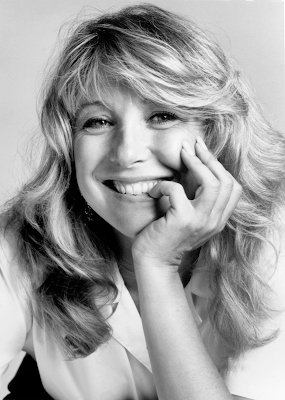
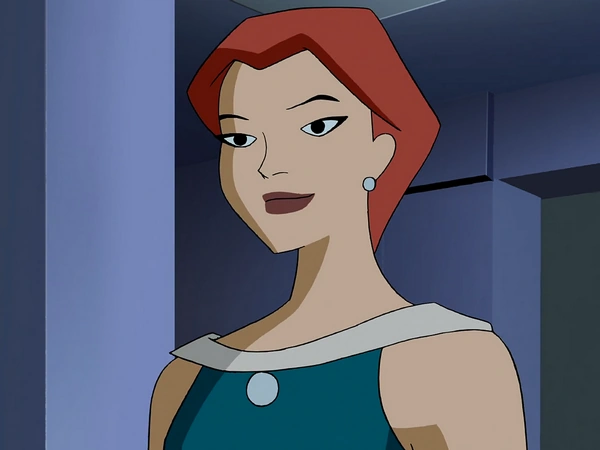
She starred as Mary McGinnis in the Batman Beyond franchise, and
appeared as Amelia Adams in an episode of Sesame Street; as herself in an
episode of The Weird Al Show; and as Sandy Gordon in an episode of What’s
New, Scooby-Doo?
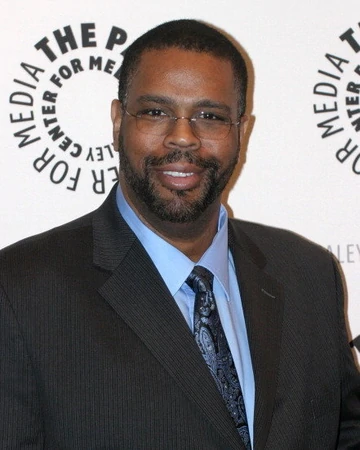
He starred as Rocco in “The Adventures of Con Sawyer and Hucklemary Finn”
episode of ABC Weekend Specials; Mack in Big Guy and Rusty the Boy
Robot; Jeb in an episode of What’s New, Scooby-Doo?; and Olaf in Pound
Puppies (2010).
Depending on your age, you probably knew him best as half of the Bosom Buddies, an opportunistic showbiz person on Newhart, or the TV patriarch of the Honey I Shrunk the Kids franchise. He also had a small voice acting portion to his career where he played a driver and Wilford Wolf in two episodes of Animaniacs
(1993); John Hamner and The Shark/ Gunther Hardwicke in two episodes of Batman:
The Animated Series; recurring character Preston Vogel in Gargoyles;
Weird Guy and Mr. Perfect in two episodes of Pinky and the Brain; and
Professor Higginson in What’s New, Scooby-Doo?
He starred as The Grump in Here Comes the Grump; Sheldon the Sea
Genie in Sigmund and the Sea Monsters; Uncle Fester in The Addams Family (1992); and The Royal
Record Keeper and the Royal Judge in The Emperor’s New School. He also
guest-starred as Mr. Wackypants in an episode of What’s New, Scooby-Doo? and
provided additional voices for Popeye and Son, Snorks and Garfield and Friends.
For more information on the history of Scooby-Doo, check out the post here.
The early 1990s were
a quiet time for the Scooby-Doo franchise, and a period of some sweeping
changes.
Shaggy's love of meat drove off Casey Kasem.
Scooby’s ratings had suffered a serious decline. A
Pup Named Scooby-Doocame to a conclusion with no new incarnation
to follow for the first time in two decades. The Scooby made-for-TV film series
that had been running concurrently since 1987 also ended with 1994’s Scooby-Doo! in Arabian
Nights; again, with no plan for a follow-up. Casey Kasem, who had
voiced Shaggy since the beginning, had left the role in 1995 over a dispute
with the producers of having Shaggy appear in a Burger King commercial
(Kasem was a vegan and wanted Shaggy to at least be portrayed as a vegetarian).
Don Messick, the original
voice of Scooby, decided to retire from the role as his quitting smoking made
him unable to achieve the rasp needed to do the voice properly. He ultimately
retired from acting altogether after a stroke in 1996, and died from a second
one in 1997.
Behind the scenes, Turner
Broadcasting System had purchased Hanna-Barbera Productions
in 1991 in order to gain access to their library and begin their own network: Cartoon Network. The studio was
renamed Hanna-Barbera Cartoons and began producing new content exclusively for
Turner networks while the back catalog filled up the majority of Cartoon
Network’s—later sister station Boomerang’—air
time. In 1996, Turner merged with Time
Warner and Hanna-Barbera became part of Warner
Bros. Animation, before being absorbed entirely in 2001 following William Hanna’s death.
Johnny Bravo meets the Scooby gang.
Conspicuously absent at this time was any new Scooby content. However,
the various Scooby shows were shown regularly in reruns on the Turner networks
and saw a significant surge in ratings. This was capped off by the warm
reception to the 1997 Johnny
Bravoepisode segment “Bravo Dooby-Doo”, which featured a
crossover with the Mystery, Inc. gang. This would be Heather North’s last outing as
the regular voice for Daphne Blake, briefly retiring from acting until 2003
when she would return, along with original Velma Nicole Jaffe, for two
direct-to-video movies.
Warner executives wanted some new projects based on Hanna-Barbera’s
existing properties and decided to give Scooby a shot with a one-off
direct-to-video film. Scooby-Doo
on Zombie Islandwas released to home video on September 22,
1998. It was written by Glenn
Leopold, who had worked on the franchise since 1979’s Scooby-Doo
and Scrappy-Doo, based off of his unused SWAT Katsscript.
Jim Stenstrum served as
director, and the driving force behind making the monsters encountered in the
film real; a fact that was heavily promoted in the film’s marketing (and
ignored the prior television series where this occurred). With very little
oversight from Warners, the film’s crew was allowed full creative freedom and
made it significantly darker in tone than the previous TV entries, as well as
gave the characters a design update.
Fred discovers that's not a mask.
Frank
Welker was the only original cast member to return, voicing Fred once again. Initially,
voice director Kris
Zimmerman felt that Welker’s voice had gone down
an octave and Welker could no longer do the same voice, which Welker disputed
as Fred’s voice was practically his natural speaking voice. Upon review, it was
determined that the production crew was misled by the fact that Scooby reruns
were time-compressed and sped up slightly, altering the vocal performances.
Kasem was offered a chance to return, but as there were scenes already made of
Shaggy eating crawfish he declined and was replaced by Billy West.
Scott Innes was hired as the voice of Scooby, and Mary-Kay Bergman took over the role of Daphne. B.J. Ward reprised Velma from Johnny Bravo.
Zombie
Island proved a hit in sales and earned two award nominations in 1999. Warner Bros. commissioned
additional direct-to-video movies in what would become an ongoing series;
although only the first three follow-ups would maintain the same continuity as Zombie
Island. Because Scooby was now a viable property, Warner Bros. became
increasingly involved in micromanaging the films’ productions, driving out the
production crew. WB would slowly bring the series back to the status quo of the
original programs while toning down the things that made Zombie Island so
successful. Innes would take over Shaggy from West with the second film,
assuming double-duty with voicing Scooby, and following Bergman’s death her
favorite student, Grey DeLisle, would take over as Daphne for the fourth. Around
this time, the first
live-action film was also in production and set
to hit theaters the following year.
The gang is back with a new look and modern technology.
With all
this new love for Scooby, it was time to look into creating the ninth
incarnation of the franchise. Originally announced as a joint venture between Kids’ WB and Cartoon Network called All-New Scooby-Doo!: The
Animated Series, What’s New, Scooby-Doo? was the first series not produced
by Hanna-Barbera, but instead by Warner Bros. Animation, as well as the first
time the entire Mystery, Inc. gang had been together regularly in their teenage
forms since 1980. It also completely abandoned the Hanna-Barbera sound library
in favor of newer, more realistic sound effects. The ironically named What’s
New was a return to the classic mystery-solving format of the franchise,
with the Mystery, Inc. gang travelling around to various locations and
encountering criminals in disguises trying to frighten people away from their
crimes (although, occasionally, a villain would slip through with a sympathetic
motive).
A real dead-head behind the wheel.
What’s
New, Scooby-Doo? debuted on The WB
as part of the Kids’
WB programming block on September 14, 2002. Welker
was given the additional duties of voicing Scooby after the producers’ first
choice, Marty Grabstein, was too busy recording for Courage the Cowardly Dog. Kasem returned after
the producers made Shaggy a vegetarian, and would be the final series in which
he’d voice the character even though he’d continue to do so in the subsequent
animated films. Mindy Cohn also succeeded Ward as the permanent voice for
Velma. While the character designs took inspiration from the original
Hanna-Barbera models, they were refined by Scott Awley and Scott
Jeralds to make them look less two-dimensional. Fred
and Daphne also received slight changes to their attire; with Fred losing his
ascot and given a blue stripe across his torso and arms, and Daphne no longer
wearing her green scarf and her dress having a new design. The characters’
personalities received some tweaking, as Velma’s intelligence was elevated
greatly, Fred was dumbed-down slightly in an attempt to give him more of a
personality, and Daphne was no longer danger-prone or the damsel in distress
and became a woman of action who could take care of herself. Shaggy and Scooby,
who became the prominent faces of the franchise for a time, had the focus taken
off of them and put onto their friends for a majority of episodes (although
they do have a starring role without the others in the episode “Camp
Comeoniwannascareya”).
The Hex Girls: Dusk, Thorn and Luna.
In a first
for the teen incarnation of the franchise, there were recurring characters and
locations seen in multiple episodes. Amongst them was Elliot Blender (Kimberly Brooks), a spoiled genius that often lost to Velma in contests;
Melbourne O’Reilly (Steve Blum), an Australian adventurer and explorer and one of Fred’s
heroes; Gibby Norton (voiced by and modeled after Eddie Deezen), a nerd who had an unrequited crush on Velma and often
tried to impress her by being the mystery’s villain; Mr. B (Jeff Bennet), who owned a group of mischievous puppies known as the
Secret Six: Maize, Knox (both Jennifer
Hale), Jingle (Colleen O’Shaugnessey), Flax (Dee
Bradley Baker), Bling-Bling (DeLisle) and
14-Karat (Welker); and Professor Laslow Ostwald (Dave Foley & James
Arnold Taylor), an inventor. Crossing over from
the 2nd and 5th animated films were the Hex Girls: an
all-female eco-goth rock band comprised of lead singer and guitarist Thorn
(Hale), drummer Dusk (Jane Wiedlin) and keyboardist Luna (Brooks). Additional character designs
were handled by Strenstrum, Susan Crossley, Dexter
Smith, Tim Maltby, Phil
Bourassa, Hyunsook Cho, Joe Sichta and Kathi
Castillo.
The series’ theme was performed by the band Simple Plan, who
also appeared as themselves in the episode “Simple Plan and the Invisible
Madman”, and had three of their songs, “I’d Do Anything” and “You Don’t Mean
Anything” and “The Worst Day Ever”, featured on the show. The theme was written
by Rich Dickerson and Gigi Meroni, who composed the rest of the series’ music. Each
episode’s chase sequence featured either an original or a licensed song by
typically an indie, punk or alternative band (increasingly so following the
first season). Along with Lotto
Animation, who also handled the opening titles,
the series was animated by Wang Film
Productions and Dong Woo Animation Co., Ltd.
What’s New spent most of its run on the Saturday morning Kids’ WB
line-up, airing several episodes during the weekday version of the block,
across three seasons. It went on indefinite hiatus in 2005, and what would be
the final episode aired on Cartoon Network in 2006. Between 2003 and 2006, Warner
Bros. Home Video released 10
DVD volumes containing for episodes each—usually
fitting in with a specific theme indicated on the DVD title. From 2007-08, they
released all three
complete seasons in individual volumes, then as a
single
volume in 2019. Several episodes were adapted into
book form by Scholastic, and Phoenix
International Publications would publish a look
and find book. What’s New designs would be
incorporated into the then-ongoing Scooby-Doocomic series by DC Comics as well
as the direct-to-video movies until 2009’s Scooby-Doo! and the
Samurai Sword.
EPISODE GUIDE:
Season 1:
“There’s No
Creature Like Snow Creature” (9/14/02) – Rumors of a snow creature reach the
gang on their skiing holiday, but Velma and Fred end up out of commission for
the mystery.
“Big Scare
in the Big Easy” (10/5/02) – While the gang stays in New Orleans, two ghosts
re-enact their Civil War battle and drive off the other guests of the housing
estate.
“It’s Mean,
It’s Green, It’s the Mystery Machine” (10/26/02) – Investigating why the
Mystery Machine has seemingly come to life leads the gang to its original
owners.
“Riva Ras
Regas” (11/2/02) – The gang wins a contest to meet Lindsay Pagano in Vegas, but
end up having to investigate the ghost of a magician that haunts the venue.
“Roller
Ghoster Ride” (11/9/02) – Scooby and Shaggy win a contest to design a new
roller coaster for a theme park, but a ghost is intent on sabotaging all the
rides there.
“Pompeii and
Circumstance” (2/22/03) – The gang encounters a zombie gladiator in Pompeii who
seems to be connected to illegal waste dumping in Mt. Vesuvius.
“The Vampire
Strikes Back” (10/18/03) – The gag heads to the recording of The Hex Girls’
latest music video in Transylvania where a vampire is on the loose.
Song: “Petrified Bride” – The Hex Girls
“A
Scooby-Doo Halloween” (10/24/03) – The gang goes to spend Halloween with
Velma’s relatives but some scarecrows are eager to spoil the fun.
“The San
Franpsycho” (3/20/04) – The gang visits Ryan Sheckler at the Grind Games in San
Francsisco, but the games end up terrorized by the ghost of a former Alcatraz
inmate.
“Simple Plan
and the Invisible Madman” (3/22/04) – When the gang’s and Simple Plans’ vans
are wrecked, they’re forced to stay in a ghost town where something invisible
stalks the band.
“Diamonds
Are a Ghoul’s Best Friend” (3/5/05) – At the Emperor Cup game between the US
and Russian ice hockey teams, a former Russian hockey player makes off with the
trophy.
Song: “I’ll Search Forever” – Rich Dickerson
“A
Terrifying Round with a Menacing Metallic Clown” (3/12/05) – Shaggy’s mini-golf
tournament is terrorized by a giant metallic clown.
“Block-Long
Hong Kong Horror” (3/26/05) – The gang joins Shaggy in Hong Kong to get his
rubber duck repaired at the same time the city is terrorized by a dragon.
“Gold Paw”
(4/9/05) – The gang visits the Secret Six at Fort Knox, which is haunted by a
creature made of gold that turns whatever it touches into gold.
“E-Scream”
(7/21/06) – Velma tries to relax while the others enjoy a video game
convention, but she stumbles upon a virtual-reality game that has come to life.
William Schallert died on May 8th. You can read the full story here.
He guest-starred as Dr. Cowtiki in The Angry Beavers; Judge Linden in The Zeta Project; and Farmer P, Neville
Popenbacher and Professor Pomfrit in What’s
New, Scooby-Doo? He also provided additional voices for Dinky Dog,
Actor Larry Drake died on March 17th. You can read the full story here.
Best known from L.A. Law and in certain circles the Darkman movies, Drake guest-starred on three different Warner Bros. productions: Superman: The
Animated Series as Mr. Eelan, Batman Beyond as
Jackson Chappell and What’s New,
Scooby-Doo? as Moss T. Meister/Scooby Snax Monster.