December 09, 2023

HISTORY OF THE CARE BEARS

 
            American Greetings had a hit with their line of Strawberry Shortcake dolls in the early 1980s; selling plenty of the fruity-smelling toys themselves as well as tie-in merchandise like stickers, lunchboxes, and anything else they could slap the characters’ images on. But what was next?
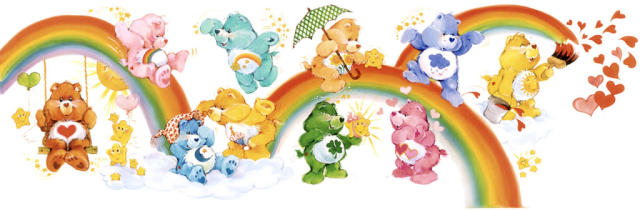
The original 10: Tenderheart Bear, Cheer Bear, Bedtime Bear, Birthday Bear, Wish Bear, Good Luck Bear, Friend Bear, Love-a-Lot Bear, Grumpy Bear and Funshine Bear.

            Jack Chojnacki and Ralph Shaffer, co-presidents of American Greetings’ character development division, Those Characters From Cleveland (currently known as Cloudco Entertainment), strategized with their toy-manufacturing partner, Kenner, over that very thing. Kenner wanted to expand from the plastic toy market into the plush one; in particular, with their own kind of teddy bears as they made up 40% of the plush market. TCFC, however, had the unenviable task of trying to figure out how they could make their own distinctive version of a toy that had been around for 80 years by that point. Artist Elena Kucharik was commissioned to do some preliminary sketches of the bear characters. Another artist, Dave Polter, was hired to do work on a card line that used symbols to convey emotions; universal symbols understood by parents and kids alike such as hearts and rainbows. Shaffer then was struck with the inspiration to put those symbols onto the bears, turning them into a representation of human emotions that could help parents talk to their kids about them.
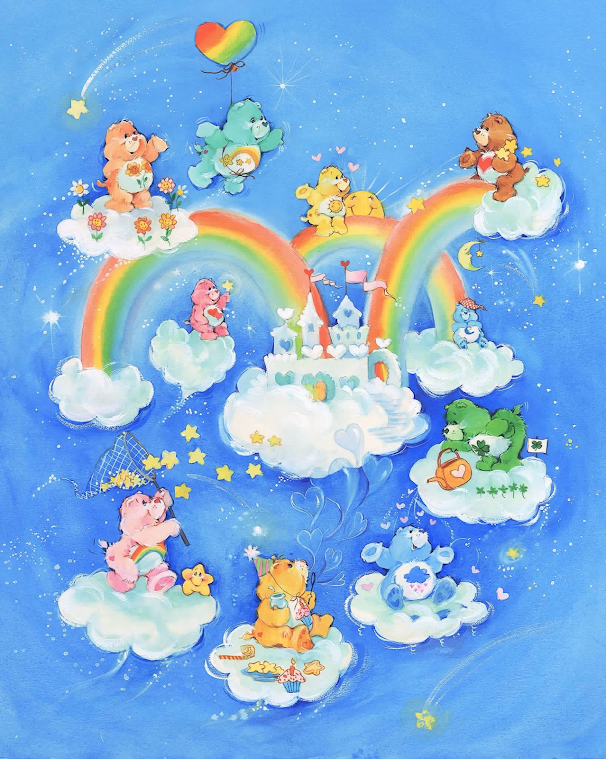
The original 10 Care Bears around Care-A-Lot.


            The characters’ designs went through constant revisions as they tried to finalize their ultimate looks, with Linda Denham, Linda Edwards, Muriel Fahrion, Tom Schneider and Clark Wiley all playing a role in their design. Designer Sue Trentel, who was responsible for bringing Strawberry Shortcake to life, was again tasked with turning the drawings into actual plushies. The end result was 10 bears of different colors representing 10 different emotions: Bedtime Bear, Birthday Bear, Cheer Bear, Friend Bear, Funshine Bear, Good Luck Bear, Love-a-Lot Bear, Tenderheart Bear, Wish Bear, and, to balance out all the sweetness, Grumpy Bear. Each one had a distinctive symbol known as Belly Badges on their tummies depicting their role or specialty, heart-shaped noses, and a heart-shaped brand on their backs to mark them as officially part of the line. Edwards came up with the name “Care Bears” during a naming session. Lore was established that the Care Bears resided in the town of Care-a-Lot (a play on Camelot) within the cloud-based Kingdom of Caring, which featured rainbows and architecture comprised of or adorned with hearts and stars. The Care Bears would journey down to Earth to complete missions of caring, typically by using their Care Bear Stare: an ability to project a glittery beam of energy from their tummy symbols that can subdue an enemy’s evil or heal people and objects.

Merchandising bonanza.


            With American Greetings’ CEO Morry Weiss’ blessing, Chojnacki embarked on an aggressive marketing campaign for the Care Bears. Aside from the dolls and greeting cards themselves, thousands of licensed products were set up to launch simultaneously with a potential plan for animated adaptations. With 26 licensees on board, it made it easier to get stores interested in carrying the bears.

Kenner's Care Bear offerings.


            After 2 years and millions of dollars, Care Bears were introduced to investors in 1982 and to the public at Toy Fair in New York City. A one-night-only play centered around the characters was produced, which had Strawberry Shortcake introduce the Care Bears to the world. The line’s official launch came in February of 1983 as stuffed toys tended to sell better around Easter time. And sell they did, rapidly moving off shelves along with their associated merchandise and greeting cards. As part of the line’s promotion, an animated special was commissioned from Atkinson Film-Arts studio called The Care Bears in the Land Without Feelings, which adapted the Parker Brothers book Caring is What Counts. The special saw a young boy named Kevin (Justin Cammy) running away to the Land Without Feelings when his family decides to move, and mad scientist Professor Coldheart (Les Lye) turns him into a goblin slave.

The Care Bear Cousins: Swift Heart Rabbit, Proud Heart Cat, Lotsa Heart Elephant, Gentle Heart Lamb, Brave Heart Lion, Cozy Heart Penguin, Playful Heart Monkey, Bight Heart Raccoon, Loyal Heart Dog and Treat Heart Pig.


            In 1984, a spin-off line was introduced called the Care Bear Cousins, featuring animals besides bears and the Care Cousin Call instead of the Care Bear Stare.  A second special followed, called The Care Bears Battle the Freeze Machine, which introduced new characters Baby Hugs (Noreen Young), Baby Tugs, their caretaker Grams Bear, and Coldheart’s sidekick, Frostbite (Bob Dermer). This special had a new kid, Paul (Dominic Bradford), who wanted revenge on his bullies and ended up being tricked by Coldheart into fixing his Careless Ray Contraption, which he intended to use to freeze every kid in town. It won an award for Best Children’s Program at the National ACTRA Awards.


            Since the line’s conception, ideas for a feature film had been in the works. American Greetings chose Nelvana, on the verge of bankruptcy due to the failure of their 1983 film Rock & Rule, to work on the film based on the Strawberry Shortcake specials they had previously done for them and their experience making a feature (even if it ended in disaster). The Care Bears Movie became one of the first to be based on an established toy line. Written by Peter Sauder and directed by Arna Selznick, the film was released on March 29, 1985 and marked the animated debut of the Care Bear Cousins. The story saw the Care Bears team up with a couple of orphans to stop an evil spirit (Jackie Burroughs) from destroying all happiness in the world. Despite negative reviews, the film went on to gross $34 million against a $2 million budget, making it a success.

A Playful Heart Monkey greeting card.


            With everything riding along smoothly, it was time to take the next step and turn the Care Bears into a television sensation…

December 06, 2023

NORMAN LEAR DEAD AT 101


You can read the full story here.


Legendary producer and screenwriter with over 100 shows to his credit. One of those was Channel Umptee-3, which was the first show to meet the then-new FCC educational programming requirements.

December 02, 2023

RESCUE HEROES


RESCUE HEROES / RESCUE HEROES: GLOBAL RESPONSE TEAM
(CBS, Teletoon, WB, October 2, 1999-December 18, 2002)
 
Nelvana, Hong Guang Animation (season 1)


Rescue Heroes was an animated series based on the Fisher-Price toyline of the same name. Debuting in 1997, the toys featured various rescue personnel (firefighters, police officers, construction workers, medics, etc.) with exaggerated features (large hands and feet, burly chests for the male characters), interchangeable tool backpacks that had various electronic or mechanical actions, and names that were generally puns related to their specialty. Over the course of the line, various sub-lines were made that introduced new features to the figures: such as light-up tools or glow-in-the-dark uniforms. One sub-line involved a partnership with the FDNY initially designed to help spread the message of fire safety to children in New York City with part of the proceeds going to the fire department, but altered after the September 11 attacks to have all the proceeds donated to them.


To promote the toys, a pilot was commissioned for a potential animated series. “Lava Alarm” was produced by Pictor Entertainment Corp for Alliance Multimedia Inc., written by Diana West and starred Brooks Barnett, Teorri Higginson, Loretta Jafelice, David Keeley, Tabitha Lupien, Merwin Mondesir, Pandou Mowlins, Deborah Odell, John Ralston, David Rosser, Ron Rubin, Corey Sevier, Mike Shara, Paul Soles and Adrian Truss. The half hour episode, animated by Toon-Us-In Animation, introduced the characters and showcased their gear and mission.


When the series was purchased by CBS, production moved to Nelvana, with whom CBS had an arrangement with to provide programming for their CBS Kidshow programming block on Saturday mornings, with co-production handled by Hong Guang Animation. The show centered on the Rescue Heroes team: an assembly of elite first responders equipped with high-tech gadgetry that were called in whenever an emergency became too much for standard rescuers to handle anywhere in the world. They primarily operated out of the cliffside Rescue Heroes Command Center; however, they also had a submersible Aquatic Rescue Command Center for sea operations and an orbiting space station called The Hexagon that monitored global activity for emergencies.

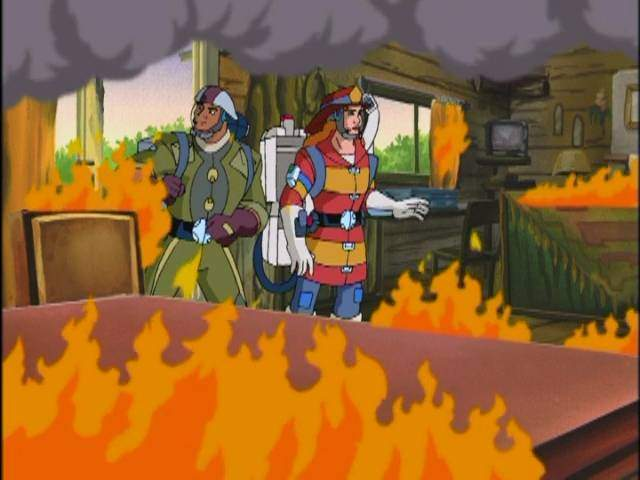
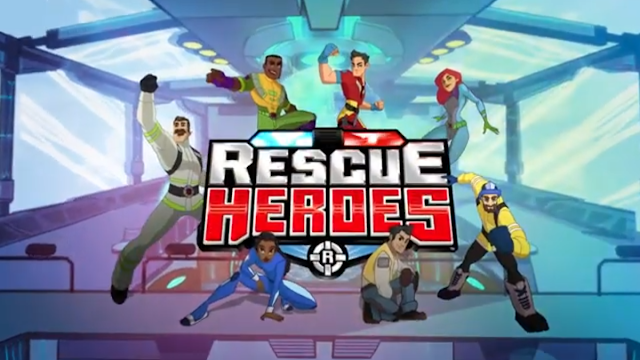
Promotional art featuring (from front): Billy Blazes, Wendy Waters, Rocky Canyon, Jack Hammer and Jake Justice.


The Rescue Heroes were led by Billy Blazes (Norm Spencer), a Canadian firefighter who inspired his younger brother, Bobby (Neil Crone), to become one as well. He always put the mission first, and was quick to dole out fatherly advice when needed. The main team was comprised of second-in-command Wendy Waters (Lenore Zann), a fire rescue specialist that pushed herself to live up to her father, Warren Waters (John Bourgeois), who was the team’s director and chief dispatcher; Jake Justice (Martin Roach), a police officer that served as the team’s primary law enforcement specialist and worked with local units to cordon off areas and detain suspects; Ariel Flyer (Lisa Messinger), a former stunt pilot and airborne auxiliary unit that co-piloted the team’s Hyper Jet; Jack Hammer (Rod Wilson), a construction specialist that earned his place on the team by saving colleagues during the building of the Command Center and had a problem with his sister, Jill (Alyson Court), becoming a firefighter; and Rocky Canyon (Joseph Motiki), a mountain climbing specialist who was a rookie on the team and sometimes struggled to gel with their methods.

Braving the elements.


Other members of the team often called on in various situations included Aiden Assist, a high-tech wheelchair-bound paramedic; arctic rescue specialists Al Pine (Edward Glen) and Bob Sled (Andrew Sabiston); Ben Choppin (Robert Bockstael), a lumberjack; Bill Barker (Kent Sheridan), a ground patrol specialist and K-9 unit operative partnered with a  German Shepard named Buster; Bob Buoy (Dorian Harewood), a scuba diver and leader of the Aquatic Rescue Command Center; Brandon Irons, a cowboy wildlife rescue specialist and spring-shoe operator; Captain Cuffs, a soldier-like police captain; Cliff Hanger (Adrian Hough), an Australian birdwing operator and hang-glider; Eddie Splash, an ocean rescue specialist that had a strong relationship with Ariel; Gil Gripper (Paul Essiembre), a scuba diver and jet ski operator that worked with a dolphin named Nemo; Hal E. Copter (Tony Daniels), an aerial firefighter that used a helicopter pack; Kenny Ride (Richard Yearwood), a bicycle patrol officer that once won the Tour de France; Matt Medic (Andrew Pifko), a field medic and head of the emergency medical response team; Maureen Biologist (Jane Luk), a marine life specialist that worked with a trained Mako shark named Mako; Patrick “Pat” Pending (Donald Burda), the chief equipment designer for the team; Perry Chute (James Rankin), a Scottish parasailer that performed aerial rescues; Rip Rockefeller (Cal Dodd), a mountaineer and construction worker; Rock Miner, a rescue minor that worked with a bat named Radar; Roger Houston (Christopher Earle), a communications officer aboard the Hexagon; Sam Sparks (Vince Corazza), a member of the fire rescue squad; Sandy Beach (Jesse Collins), an Australian lifeguard that loved surfing on tidal waves; Sergeant Siren (Dean McDermott), a British police officer partnered with traffic officer Willy Stop (Paul Haddad); Seymour Wilde (Cedric Smith), an Australian animal wrangler; and Trixie Tracker (Sarah Edmondson), a police officer and crowd control specialist.


Rescue Heroes debuted on CBS as part of the CBS Kidshow programming block and Teletoon (now Cartoon Network) in Canada on October 2, 1999. Initially, the series only lasted a single under-advertised season. CBS had ended their programming deal with Nelvana following the merger of Viacom and CBS Corporation in early 2000. As a result, they entered into a new programming arrangement network cousin Nickelodeon in a block called Nick Jr. on CBS. However, reruns continued on Teletoon and proved to be popular enough for two additional seasons to be commissioned with the added subtitle Global Response Team. The series was slightly retooled to tone down the comedy for increased tension in situations, raise the stakes of the dangers the characters faced, and altered the character designs to make them look less cartoony like the over-exaggerated toys. The animation itself received a facelift, going from traditional cel animation by Hong Guang Animation to digital ink and paint by Akom Production Company, Super Sonics Productions Inc. and Mercury Filmworks. The format was also changed to show two story segments for most of the episodes as opposed to the single full-episode stories of the first season. Kids’ WB would pick the show up for airing in the United States. Because of the delay between seasons, Messinger was unavailable to reprise her role of Ariel and ended up replaced by Odell, who had starred in the original pilot episode.

Fiery search and rescue.


The entire first season was written and story edited by Rhonda Smiley, with Brent Piaskoski taking over as executive story editor and writer along with Terry Saltsman, Jules Dennis, Kenn Scott, Isaac Szpindel, Howard Nemetz, Melissa Mortimer, Howard Busgang, Ian James Corlett, Alan Swayze, Lorne Wise, Edgar Lyall, Shane McDougall and Michael Gelbart. John Semper Jr. was an executive consultant for the first season. Each episode ended with a PSA message delivered by the characters with important safety tips on how to handle various situations. Dr. Miki Baumgarten served as the educational consultant and Paul Tessier as the safety consultant. The theme was composed by Martin Kucaj. Additional music was composed by Jack Lenz for Downright Adagio Inc., and later Lenz Entertainment. Designs were handled by Boomstone Animation Inc. and Side Show Entertainment Inc. Although the series was cancelled after its third season, it was given a big send-off the following year with a completely computer-animated direct-to-video film.

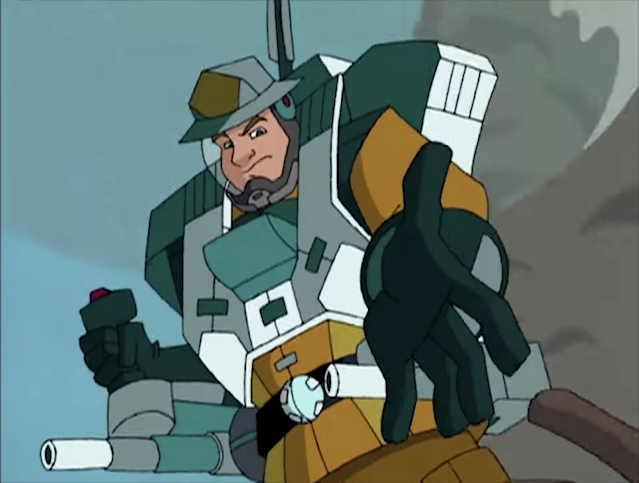
Hal E. Copter patrolling the skies.


Reruns of Rescue Heroes aired on Qubo from 2009 all the way until its ending in 2021, and from 2012-14 on Vortexx, the final format of what was formerly Kids’ WB. It was made available to stream on Pluto TV, Pure Flix, Freevee and Peacock, and was uploaded to YouTube on the Treehouse Direct channel; a subsidiary of Corus Entertainment along with Nelvana. Fisher-Price released various episodes to VHS, either sold individually or included for free with the purchase of an action figure. They were also released to four DVDs under the title Adventure Collection, with the first two volumes containing 7 episodes each and the last two containing 12.


A number of educational video games were released featuring the characters. The first three took stronger influence from the toys, despite their boxes featuring visual cues reminiscent of the show. The series was prominent in the remaining games beginning with 2002’s Tremor Trouble and its sequel, Meteor Madness, developed and published by Knowledge Adventure for home computers, and 2003’s Mission Select developed by Knowledge Adventure subsidiary Funnybone Interactive and published by Vivendi Universal. The games featured a team of Rescue Heroes (with each one being used in turn) contending with various disaster mini-games selected from a central hub map. The next game, Lava Landslide, was developed by Knowledge Adventure and took a more linear approach with each level appearing in succession as the story played out rather than using a hub. Each stage featured a mini-game that gave the current hero more power-up power or fuel. Notably, the vehicles in that game featured designs closer to their toy versions. Modern publishing also released a series of coloring books beginning in 1999, again blending the show and toy designs.

The new Rescue Heroes.


The Rescue Heroes toyline continued for a few more years before Fisher-Price ended production in 2007. From 2010-13, the toyline was resurrected under the Hero World line featuring other licensed characters. In 2019, the line was relaunched again as a Walmart exclusive. A new animated series was produced alongside it, with 14 5-minute episodes uploaded to Fisher-Price’s YouTube channel. While Billy (Jason Paquette) and Rocky (Wellington Saygbay) both returned, the rest of the team was comprised of new characters and others that hadn’t yet been adapted.


EPISODE GUIDE:
Pilot:
“Lava Alarm” (4/7/98) – The team must rescue a scientist’s family as they camp on an island with a volcano about to erupt.
 
Season 1:
“Peril on the Peaks” (10/2/99) – An overzealous Rocky ignores the team’s rescue plan and ends up putting them all in peril.
 
“El Niño” (10/9/99) – The team tries to save a town from a mudslide, but one elderly resident insists on relying on an ancient legend to save them.
 
“Tidal Wave” (10/16/99) – Wendy must overcome her fear of underwater rescues in order to help Gil Gripper plant explosives to stop a deadly tidal wave.
 
“Twister” (10/23/99) – When a tornado threatens his hometown, Rocky must choose between saving a hot rod with sentimental value or his old nemesis.
 
“Electrical Storm” (11/6/99) – An electrical storm causes a series of problems for a small town.
 
“Meteor” (11/13/99) – Recovering from her injuries with her father in the Space Command Center, Wendy becomes part of the front lines of stopping a meteor shower on its way to Earth.
 
“Arctic Spill” (11/20/99) – Jack pushes himself too hard to complete the underwater repair of a ruptured oil tanker.
 
“When it Rains, it Pours” (12/4/99) – Ariel is asked to be a spokesperson for a national safety council, but it would take too much time away from her being an actual rescuer.
 
“Cave In” (12/11/99) – Rocky must rescue his former mentor from a cave in.
 
“The Fire of Field 13” (12/18/99) – Billy’s brother’s anger causes even more problems than the massive forest fire they’re trying to put out.
 
“Four Alarm Fire and Brimstone” (1/15/00) – While Jake puts up a family whose house was damaged by fire, their kid sneaks aboard the Hyperjet during an emergency.
 
“Storm of the Century: Part 1” (1/22/00) – Billy must work with his estranged father when a series of storms leaves them stranded in the Hyperjet.
 
“Storm of the Century: Part 2” (1/29/00) – Billy and his father put their differences aside and work together to rescue others.
 
Season 2:
“Wildfire / White Wall of Terror” (7/21/01) – The team must deal with a wildfire that threatens an African Wildlife Reserve. / Rocky’s ski vacation is cut short when two teens are buried under an avalanche.
 
“Rock Star on the Rocks / Last Stop – Disaster” (7/28/01) – The team must save a rock star and his daughter after their plane crashes in a remote mountain area. / The team must stop a runaway Japanese bullet train.
 
“Houston, We Have a Problem / Trapped Beneath the Sea” (8/4/01) – Roger Houston feels left out watching rescues from space until an out-of-control satellite crashes on the planet. / The team must rescue sailors from a submarine that collided with a cruise ship.
 
“Underwater Nightmare / Eye of the Storm” (8/11/01) – A boy must face his fear of swimming when an underwater volcano rocks an aquarium. / A boy that idolizes the team ends up being rescued by them and his father, the town’s sheriff.
 
“High Anxiety* / Canyon Catastrophe” (8/18/01) – Wendy’s competitive nature ends up jeopardizing a rescue. / Three teen mountain bikers get into trouble when they decide to ride restricted paths in the Grand Canyon.
*Originally aired as “Terror in the Tower”, but changed after the September 11 attacks.
 
“Mayhem in the Mist / Sibling Blowout” (8/25/01) – A fog causes a pileup in England, and an injury teaches Billy a new lesson about leadership. / Jack is against his sister becoming a firefighter until they need to work together to stop one.
 
“Smokejumpers” (9/1/01) – A fire threatens to devastate a national forest and the nearby town.
 
“Edge of Disaster / Flood of Fear” (9/26/01) – Rocky leads a rescue expedition on the world’s most dangerous peak. / Jack’s sense of humor begins to rub Jake the wrong way.
 
“Summertime Twister / The Chilling Championship” (10/24/01) – A twister devastates a campground full of campers. / The team must rescue high school basketball players after their bus crashes into an icy river.
 
“Flashback to Danger” (11/7/01) – Almost causing a fatality makes Rocky decide to quit, but Billy tries to change his mind by telling him a story about the only other Rescue Hero that decided to.
 
“Tidal Wave of Pride / A Whale of an Adventure” (11/14/01) – An extreme sports competition at a seaside community is about to get a visit from a massive tidal wave. / Bill Barker would rather work on his strength than train for the circus until a rescue shows him the value of it.
 
“Shake Up in the Jungle / Lights, Camera, --Destruction!” (11/21/01) – A professor and his students end up trapped in the jungle after an earthquake. / A actor studying the team ends up interfering with a mudslide rescue.
 
“Rescue Robots / Race to the Finish” (11/28/01) – Billy disproves of a new Rescue Robot until it becomes the only thing that can save him. / While Al Pine and Bill Baker compete in a dogsled race, the team must rescue two boys trapped in an abandoned mine.
 
Season 3:
“Heroes” (9/11/02) – While the team is honoring the various rescue teams they’ve worked with, everything seems to go wrong for a nervous Billy.
 
“Ultimate Ride / The Newest Rescue Hero” (9/18/02) – Jake is forced the pilot the new ultimate robot vehicle he had difficulty with when Jack is injured in the mission. / Jack gets his sister onto the team, but does she really want to be?
 
“Blackout / Fire Down Under” (9/25/02) – Billy and the Night Force deal with a blackout while Aidan Assist, Sergeant Siren and Willy Stop deal with a crippled airplane. / The team deals with a series of raging wildfires in Australia.
 
“Up, Up and Uh-Oh / Fiery Differences” (10/2/02) – Avery Ator fails to perform routine maintenance on his biplane and ends up needing assistance. / Neighbors’ argument could jeopardize an entire town if a forest fire is allowed to reach the gas station.
 
“On Thin Ice / Peril in Peru” (10/23/02) – A massive snowfall threatens a senior center while Al’s nice and nephew have gone missing. / Ariel and Rock Miner must save an archaeologist from a tomb.
 
“In the Driver’s Seat” (10/30/02) – An explosion from a car crash causes fiery oil to infest the sewer and makes all water sources shoot fire instead of water.
 
“For Better or Curse / Bat’s Life” (11/6/02) – Rocky is convinced an ancient curse is making their underwater rescue of a treasure hunter difficult. / An oil drill accidentally pierces a salt vein and causes a flood that traps a mother and daughter in a cave.
 
“The Royal Rescue Hero / Foul Weather Friends” (11/13/02) – Rocky is offered the position of safety officer for a kingdom after rescuing their princess. / A hurricane hits just as two boys decide to explore the forest.
 
“Quake Me When It’s Over” (11/20/02) – Wendy is transported back to the 1906 San Francisco earthquake and must save people without any of her gear.
 
“Rock and a Hard Place / Cruise into Danger” (11/27/02) – A rock climber that skips weather training ends up trapped in a deadly storm. / A floating high school is rocked by several deadly hazards in the South Seas.
 
“Not on This Planet / Tunnel Vision” (12/4/02) – Students are accidentally shunted off into space and must work together to get home. / A truck carrying explosives accidentally explodes in an underwater tunnel.
 
“Alone for the Holidays” (12/11/02) – Rocky is depressed he needs to be on duty for the holidays, but a rescue may just remind him what the true meaning of the season is.
 
“Going with the Wind / A Bridge too Frail” (12/18/02) – Santa Ana winds cause chaos across Catalina Island. / The team wonders if they made the right choice putting Rocky in charge of operations dealing with a rockslide near the El Chorro Gorge in Spain.
 
Film:
“The Movie” (11/18/03) – A magnetic volcanic ash is causing a rash of storms around the world, and Rocky must overcome his recent screw-ups to retrieve the cure for a plant that poisoned Billy.

November 25, 2023

MARTY KROFFT DEAD AT 86


You can read the full story here.


Along with his brother, Sid, Marty was half of Sid & Marty Krofft Productions. They began as theatrical puppeteers before moving into television by designing the characters and sets for The Banana Splits Adventure Hour for Hanna-Barbera. That allowed them to branch out on their own to create H.R. Pufnstuf, The Bugaloos, Lidsville, Sigmund and the Sea Monsters, both versions of Land of the Lost, Far Out Space Nuts, The Lost Saucer, The Krofft Supershow which included Dr. Shrinker, Electra Woman and Dyna Girl, Kaptain Kool and the Kongs, Wonderbug, Bigfoot and Wildboy and Magic Mongo, and Pryor’s Place.

November 18, 2023

DUNKIN' DONUTS CEREAL


DUNKIN’ DONUTS CEREAL
 
Ralston


            Dunkin’ Donuts, now known as simply Dunkin’, is a multinational quick service restaurant. Founded in 1950 by Bill Rosenberg (after opening as Open Kettle in 1948), the chain’s original claim to fame was its donuts and coffee; the two most popular items when he used to sell food to factories and construction sites. The chain continued to expand to include more items on its menu, particularly of the breakfast variety, and almost 13,000 restaurants. Beginning in 1981, Dunkin’ Donuts ran an ad campaign with an advertising mascot called Fred the Baker, portrayed by actor Michael Vale, whose catchphrase was “Time to make the donuts”. The campaign was incredibly popular, with the phrase’s debut commercial being named one of the five best commercials of the 1980s by the Television Bureau of Advertising. When the character was retired in 1997, by fan demand the company created an entire celebration around him including a parade in Boston and a “free donut” day. In 2019, the company began removing “Donuts” from its name to symbolize its new status as a “beverage-led” company, focusing on coffee, tea, and speedy to-go service.


            In 1988, the company attempted to expand into the breakfast market with Dunkin’ Donuts cereal. Produced by Ralston, the cereal featured three shapes representing their donuts: standard ring shapes, round balls for their Munchkins (donut holes), and figure eights. They came in two flavor varieties: glazed and chocolate. Of course, this wasn’t the first donut-inspired cereal on the market, as Ralston had released on in 1980 called Dinky Donuts and General Mills’ Powdered Donutz. Dunkin’s cereal was as short-lived as those two; lasting only a year despite the commercials and the box featuring Fred. Premiums included a send-away offer for a Dunkin’ Donuts-branded duffle bag, a flashlight, a card trick system branded by magician Harry Blackstone Jr., Nintendo trading cards with a chance to win a NES, and a back-to-school kit featuring a pencil case with pencils, erasers, a ruler and a sharpener. The cereal was also part of Ralson’s line-wide promotion offering a real Porsche.


Interactive ad for the cereal.


November 11, 2023

PINK PANTHER FLAKES


PINK PANTHER FLAKES
 
Post Cereals


The Pink Panther media franchise was conceived by writer/director Blake Edwards and ran as a series of comedy mystery movies centered around an inept French detective, Inspector Jacques Clouseau (Peter Sellers), and beginning with the theft of the titular diamond with an imperfection at the center that resembled a pink panther. While The Pink Panther proved to be a hit upon its worldwide debut in 1964, an even bigger hit was the animated titles featuring a caricature of Sellers being outwitted by a literal Pink Panther. This title sequence was done by animation studio DePatie-Freleng Enterprises.

Back of the RPX car promotion box.


Encouraged by audience reactions, DFE struck up a deal with The Mirisch Company, the film’s producers, and United Artists, the film’s distributor, to produce a series of 156 6-minute theatrical shorts (of which only 124 ended up being made) featuring Pink working through a given situation—sneaking into an alcoholic’s house to spend the night, working as a secret agent, deciding a pole would look better painted pink instead of blue, etc.—while often being at odds with the Little White Man: a minimalist rounded figure of a person with a large nose and mustache said to be modeled after DFE co-founder and initial short director, Friz Freleng. Each short, played in pantomime outside of the odd side character, was accompanied by Henry Mancini’s catchy theme.

Back of the disappearing paper promotion box.


The Pink Panther shorts proved popular enough for DFE to expand their library of offerings. They began working on The Inspector, Roland and Rattfink, The Ant and the Aardvark, Tijuana Toads, Hoot Kloot, The Blue Racer, The Dogfather, Misterjaw and Crazylegs Crane. However, as the 1960s was coming to an end, the age of the theatrical short was beginning to wane. Looking to keep their investment going, Mirisch decided to follow other studios’ leads and import these shorts onto Saturday morning television. Debuting in 1969, The Pink Panther show packaged various combinations of DFE’s shorts during its 11-year run with all-new bridging sequences and the occasional new short being added.


Post Cereals, one of the sponsors of the show, decided to create a cereal tie-in as promotion in 1972. Pink Panther Flakes was essentially corn flakes with pink coloring added, which would also turn the milk pink once it was added. Advertisements for the cereal played out like a typical Pink Panther short: the Little White Man was about to enjoy some Pink Panther Cereal when Pink decided to help himself in some fashion. Part of Mancini’s theme played over them with new cereal-centric lyrics. Among the cereal’s premiums were a 5-in-1 spy kit shaped like Pink (featuring The Inspector on the back), a zip-cord powered “RPX Car” that resembled the Panthermobile created for the show, a pad of “disappearing paper” that could dissolve in water, and a pink ball.

November 04, 2023

OREO O'S CEREAL


OREO O’S CEREAL
 
Post Cereals


            Oreo is a cookie first introduced by Nabisco in 1912 as an imitation of the Hydrox cookie manufactured by Sunshine Biscuits. It has always featured some kind of filling between two cookie pieces; only changing size (Double Stuf had double the crème, Big Stuf was a giant version sold individually, Mini were bit-sized, etc.), flavor in both the crème (lemon, mint, peanut butter, apple pie, etc.) and cookie (golden, vanilla, etc.), and cookie design over the years. It began life as “The Oreo Biscuit” before being renamed to “Oreo Sandwich” in 1921, “Oreo Crème Sandwich” in 1948, and finally “Oreo Chocolate Sandwich Cookie” in 1974 (the origin of the “Oreo” name itself remains a jumbled mystery). Oreos have also expanded to products other than cookies, including brownies, ice cream, candy bars, and, of course, cereal.


            Oreo O’s was first introduced in 1997 by Post Cereals, conceived by an Ogilvy & Mather NYC advertising employee. The cereal was made of chocolate donut-like cereal pieces covered in crème-flavored sprinkles. Early marketing for the cereal featured an ad campaign imply that the cereal was so in-demand, it created a run on milk. One of the earliest commercials featured Shia LaBeouf and Rachel Duncan as kids being “interviewed” by a reporter. The next campaign featured kids being able to see an Oreo O’s-themed paradise by looking through the cereal pieces. In 2001, marshmallow bits were added to give the cereal a new “extreme crème taste”. New CGI marshmallow mascots called The Crème Team were introduced in the commercials to promote this change. Premiums included a Nickelodeon U-Pick live Challenge Game and a free ticket to the film Rugrats in Paris featured in various Post cereals at the time; and a chance to win a cruise by finding a blue-sprinkled cereal piece.

The South Korean version.


            The cereal sold well enough for a decade. Unfortunately, behind the scenes circumstances saw an end to its production. Kraft, owner of both brands, sold off Post to Ralcorp Holdings in 2007, which meant they lost the rights to the cereals they produced before and Post lights access to the Oreo name. Interestingly, this wasn’t an issue in South Korea. Dongsuh Foods was a joint venture between General Foods (the parent company of Post) and Dongsuh Companies Inc., and they had the rights to produce Post’s cereals in the country. With Kraft’s purchase of General Foods, they became part owner of Dongsuh and thus the company was able to retain both licenses needed to continue production of Oreo O’s. An E. coli concern caused a recall of the cereal in 2014, but Dongsuh resumed its production in 2016.

The return varieties.


            As for the rest of the world, Oreo O’s would soon be making a comeback—which was probably welcome news to those who had been buying it off eBay or having friends in South Korea send them some. In 2012, Oreo’s parent company became MondelÄ“z International and talks were opened with Post on the cereal’s possible return. In 2017, Post tested the waters by releasing a cereal called “Cookies & Cream” through their Malt-O-Meal brand. They sold well, and through a marketing deal made by Walmart for exclusive rights for the first three months, Post announced that Nabisco could be co-branding the cereal with the original 1997 recipe—however, without the marbits. In 2018, it became widely available for all stores to carry; along with a new Golden Oreo variety by the middle of the year. In 2019, Walmart launched another exclusive with the return of the marbits in Mega Stuf Oreo O’s.

The original marshmallow variety.