July 08, 2022

LARRY STORCH DEAD AT 99


You can read the full story here.

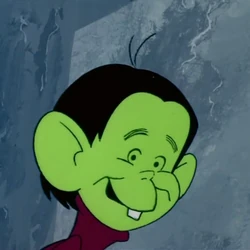
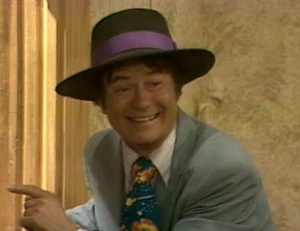
Best known for his starring role in F-Troop (which was seen in archival footage on an episode of Freakazoid!), he also had an extensive career on Saturday morning. He starred as Phineas J. Whoopee, as well as Rocky Maninoff, G. Washington Bridgit and Red Beard in Tennessee Tuxedo and his Tales; Joker in The Batman/Superman Hour and The New Scooby-Doo Movies; Drac, Ratso, Hagatha and Ghoulihand in Groovie Goolies, Sabrina the Teenage Witch, Daffy Duck and Porky Pig Meet the Groovie Goolies (where he was also The Phantom), The New Archie/Sabrina Hour and Sabrina, Super Witch; Marlon, Fleetwood and Chuck White in “The Brady Kids on Mysterious Island” episode of The ABC Saturday Superstar Movie, which was followed with The Brady Kids where he was also Mop Top, Sleezy Sam, Knuckles, Coach, Chuckonis Ospro, Krunk, Nets Nolan, Hoax, Orville Wrong, Wilbur Wrong, Major LeTraine and Colonel Jones; Eddie Spencer and Big Al on The Ghost Busters; and Mr. Mendaelbaum and Herbert Finagle in episodes of Garfield and Friends. He also provided voices for Lancelot Link: Secret Chimp, The Pink Panther Laugh and a Half Hour and a Half Show, The Bugs Bunny/Road Runner Show, Scooby-Doo and Scrappy-Doo, Mork & Mindy/Laverne & Shirley/Fonz Hour, The Puppy’s Further Adventures, and Foofur.






July 02, 2022

20TH ANNIVERSARIES

 Continuing our anniversary celebration with the programs entering


*No intro available.


15TH ANNIVERSARIES

 Continuing our anniversary celebration, these are the shows going on


DA BOOM CREW

 NOTE: This version of the intro is lacking the show's title and creator credits.

DA BOOM CREW
(The WB, September 11-October 2, 2004)
 
Berliner Film Companie Productions, Jambalaya Studios


MAIN CAST:
Jordan Francis – Justin
Melanie Tonello – Rickie
Mitchell Eisner – Jubei
Walter Borden – Zorch
Morris Day – Headlok
Jerome Benton – Jerome
 
 
*Note: Depending on where you look, the characters’ names undergo a variety of spellings. The ones used here were taken from storyboards posted by Dan Root.
 
            Four orphan friends known as Da Boom Crew created their own video game, spread across a number of floppy disks. One day while playing it, a mysterious “supernatural” portal (dubbed as “the Big Boom”) opened up above the orphanage and sucked them into an intergalactic universe that was exactly like their game. Now they’re on a mission to retrieve their disks—or “Boom Carts”, which have somehow been infused with a special kind of power that gave them a golden glow and could affect the world around them—before they’re collected by the evil Zorch (Walter Borden) and used to extinguish all light in the universe. Upon finding a Boom Cart, Da Crew would insert it into a kind of containment device to keep its powers at bay.

Da Crew at the orphanage: Nate, Justin, Jubei and Rickie.


            Da Boom Crew was comprised of Justin (Jordan Francis), the leader who wielded two blasters similar to the ones they used for their game; Nate (Jascha Washington), Justin’s younger brother who carried a toy light-up sword (based on the lightsabers from Star Wars) and tended to be a bit headstrong and brash; Jubei (Mitchell Eisner), a sharpshooter with his laser shotgun and extreme sports fanatic, always seen riding some kind of wheeled or hover conveyance and performing stunts with them; and Rickie (Melanie Tonello), a mechanical genius responsible for developing and maintaining their tech, tended to use overly large and complex words to say the simplest thing, and was a proficient fighter with her collapsible bo staff. At the start of their series, their heroics earned them some upgrades from a race of beings known as the Yodiggities: a real energy sword for Nate; a hoverboard for Jubei (the Back to the Future kind, not the real-world kind); a robot toolbox named Dent for Rickie; and a new ship for Justin to captain, called “The Whip” (although Nate served as the pilot). It was never revealed where Da Crew got their original equipment or ship.

The evil Zorch.


            Zorch’s primary minion was Headlok (Morris Day, lead singer of The Time, whom the character resembled), an egotist that enjoyed being evil while struggling with an inferiority complex and physical insecurities (his helmet was to make his head appear bigger). Although he served Zorch, Headlok had his own ambitions of conquering the galaxy for himself. His right-hand man was Jerome (The Time bandmate Jerome Benton), who was his best friend as well as his lackey. While loyal to Zorch, he was loyal to Headlok more and functioned as his hype man. Other villains included Headlok’s sister Etra (Raven Dauda), a trickster with shapeshifting abilities that favored manipulation over her brother’s direct approach; Dr. Namdra (Tony Rosato), a mad scientist that proved too unstable for Zorch and was thus fired, leaving him to create his own army to go after Boom Carts; The Crimson Raider (Robert Tinkler), Zorch’s most notorious assassin who was headstrong and cocky; and The Grargon Gang, a group of four delinquents that seemed to be mirror opposites of Da Boom Crew.

Headlok and Jerome.


            The series was created and produced by Bruce W. Smith, John Patrick White and Stiles White from a concept by fellow animator Serge Michaels that blended Star Wars with Boyz-N-The-Hood. The story began in medias res, leaving the explanation to how the kids got where they are to the intro. The theme was composed by Bud’da using a sample of the opening beat of Led Zeppelin’s “Kashmir”, and was performed by Bud’da with Francis and Washington. Bud’da also provided some of the score along with Mona Davis Music. Both Whites served as writers along with David Gerrold, Brian Swenlin, Sib Ventress and John Marsh. Smith worked on the original character designs, with additional designs by Maurice Gardner, Thorsten Kiecker, Jasen Strong, Millicent Henson, Matthias Hirsch and Devin Crane. Animation duties were handled by Koko Enterprises, Inc. (which became the mining company CNK International). A recurring element was for Da Boom Crew’s title logo to appear randomly somewhere in the background several times an episode.

A Boom Cart being contained by Da Crew.


            Da Boom Crew debuted on The WB as part of the Kids’ WB programming block on September 11, 2004. After the first four episodes aired The WB pulled the show from their line-up, replacing it with episodes of Pokémon and Yu-Gi-Oh! The remaining episodes wouldn’t air in North America until it ended up streaming on Tubi TV and Amazon Prime Video with the Ameba add-on. The entire series did air, however, when Cartoon Network UK picked it up for broadcast in 2005. While a popular reason for the abrupt removal seems to be that the show performed abysmally in the ratings, a press-release from Cartoon Network UK seemed to contradict that; calling it one of Kids’ WB’s biggest debuts in its timeslot. This would be the final series produced under Smith’s Jambalaya Studios banner once the more well-known and popular The Proud Family ended its run the following year.
 
 
EPISODE GUIDE:
“Droppin’ Da Bomb” (9/11/04) – Da Crew encounters a stranded Blurp whose fears are manifested into reality by a Boom Cart.
 
“Statue of Limitations” (9/18/04) – Da Crew sets out to help a planet become fertile again by making the dangerous trek to a mystical statue.
 
“Junk Planet” (9/25/04) – The Whip crashes onto a junk planet where Da Crew must team-up with a garbage man to take on a legendary junk-eating worm.
 
“Frogday Afternoon” (10/2/04) – Da Crew ends up caught in the middle of a tribal conflict that lands them in jail.
 
“Wanted!” (??/??/05 UK) – At a space station Da Crew is mistaken for the notorious Gragon Gang.
 
“Boom vs. Doom” (??/??/05 UK) – A mad scientist captures Da Crew in order to use the Boom Carts to power his weapons of mass destruction.
 
“Planet of Lost Lives” (??/??/05 UK) – A friend from the orphanage is found on a creepy planet where some scary things are going on.  
 
“Baby Boom” (??/??/05 UK) – Da Crew are captured and forced to work in Headlok’s mine while trying to reunite an alien baby with its mother.
 
“Ice Ice Planet” (??/??/05 UK) – Da Crew accidentally snuffs out a primitive society’s only source of heat and sets out to reignite it.
 
“The Crimson Raider” (??/??/05 UK) – Blurp joins Da Crew on a search of an ocean planet for a Boom Cart where they encounter Zorch’s top assassin.
 
“The Legendary Meemawzaza” (??/??/05 UK) – A legendary warrior makes Da Crew work hard to reclaim a Boom Cart, giving Headlok and Etra a chance to put a crimp in their plans.
 
“The Hour of the Clipse: Part 1” (??/??/05 UK) – As the Yodiggities prepare to celebrate Freedom Day, Da Crew sets out after the last cart and encounters a group of alien orphans.
 
“The Hour of the Clipse: Part 2” (??/??/05 UK) – Da Crew must infiltrate Zorch’s ship to retrieve the stolen Boom Carts.

June 25, 2022

10TH ANNIVERSARIES

Continuing our 8th anniversary celebration with the Saturday morning shows that are currently celebrating


5TH ANNIVERSARIES

This weekend marks the beginning of Saturday Mornings Forever's 8th year, and as usual we celebrate by recognizing the 5th anniversaries of the various Saturday morning programs over the last seven decades from the newest to the oldest. Join us, won't you? Here are the shows celebrating


VIDEO COMICS


VIDEO COMICS
(QUBE C-1, Nickelodeon, 1979-81)


QUBE, Warner Cable


            In terms of comic book-based television productions, Video Comics was extremely unique. In 1977, an experimental two-way multi-programmed cable TV system called “QUBE” was launched in Columbus, Ohio by Warner Cable, a division of Warner Communications. It would introduce several concepts that became standard in cable television: pay-per-view, special-interest cable services, and interactive services. Ambitiously, QUBE had to produce 10 channels of content all at once, which meant the quicker and cheaper the better. As Warner also owned DC Comics, it was decided to produce a filler series based around those comics that also encouraged children to read along. However, rather than employ the limited animation that had plagued rival Marvel Comics’ own productions in the 1960s, Video Comics instead chose to skip the animation process altogether. Instead, Video Comics was literally just a filmed comic book utilizing zooms, pans, fades, music, sound effects and voiceovers. Basically, an audio drama crossed with a book on tape.


            Video Comics debuted QUBE in 1979, eventually finding its way over to the Warner-owned Nickelodeon network shortly after its launch as a fill-in program. Some of the segments featured an intro of an artist working on pages or pictures of the characters being featured. All of the voices were provided by Diane Disque, William Hamilton and Charles Pickard, with Jon Cornell directing and editing and Dana Kadison producing. The episodes were produced at the local Owl Studios. Among the adapted series and characters were Green Lantern, Swamp Thing, Hawkman, Space Ranger, The Atom, The Flash, and Sugar and Spike for a total of 70 segments ranging from 10-20 minutes in length. Once the networks had sufficient programming in 1981, production on the series ended and it had largely gone forgotten. To date, only three full episodes and one partial exist on the internet, as well as a promo from during its run on Nickelodeon.

June 18, 2022

THE ABBOTT AND COSTELLO SHOW


THE ABBOTT AND COSTELLO SHOW
(Syndication, September, 1952-May 1, 1954)


T.C.A. Productions, Inc.


Bud Abbott and Lou Costello were an American comedy duo whose partnership spanned from 1935-57. Their pairing came about on the burlesque circuit when Abbott substituted for Costello’s regular partner after he took ill. At the insistence of other performers and Abbott’s wife, the two became a permanent team with Abbott playing the straight man to Costello’s dimwitted antics. Their work spanned between radio, film and television, making them the most popular comedy team of the 1940s and early 1950s and the highest-paid entertainers in the world during WWII. Their routine “Who’s on First?”, which debuted on the radio in 1938 a month after their first broadcast, is considered one of the greatest comedy routines of all time. When changing tastes and overexposure reduced their popularity and their film and television contracts expired, the two went their separate ways; with Costello dying soon after in 1959.

But and Lou getting into antics with Mike the Cop and Sidney the landlord.


After being part of the rotating roster of hosts for The Colgate Comedy Hour, Abbott and Costello were given their own show. It was loosely based on their radio show and even shared the same title: The Abbott and Costello Show. The premise was that Abbott and Costello were unemployed actors sharing a rooming house apartment in Hollywood. A running gag featured Abbott constantly nagging Costello to get a job while he himself remained happily unemployed. Unlike typical sitcoms, the series was more of a showcase for the pair’s burlesque routines in a manner they could control (and own, as Costello owned the show with Abbott on salary) and put little emphasis on plot, character or continuity. If it was funny, it was in the show. Other characters included their landlord, Sidney Fields (himself); their neighbor and sometimes love-interest for Costello, Hillary Brooke (herself); Mike the cop (Gordon Jones), their dimwitted foil and occasional rival for Hillary; Mr. Bacciagalupe (Costello’s brother-in-law Joe Kirk), a stereotypical Italian immigrant that held whatever job the script required; and Stinky (Joe Besser), a 40-year-old little boy in a Little Lord Fauntleroy suit.

Lou outside with Stinky.


The Abbott and Costello Show debuted in the fall of 1952, sold into syndication by MCA Inc. to approximately 40 local stations across the country; meaning it was broadcast on different days at different times in different cities. Despite airing on CBS in New York City and later NBC, the series was never carried by a national network. The only time it received network airplay was when CBS broadcast reruns as part of their Saturday morning schedule for the 1954 season. The original intro featured a montage of scenes from the pair’s early Universal films and was followed by a framing sequence with them on a stage addressing the audience (sometimes with another cast member) at the beginning, middle and end. For the second season, Brooke, Kirk and Besser were dropped, the intro was simplified, the stage segments removed, and a more traditional sitcom format adopted with tighter plots at the insistence of series director and season producer Jean Yarbrough. The series aired in reruns through the 1990s, and again from the 2010s to the present on MeTV and sister network Decades.

June 16, 2022

EVERETT PECK DEAD AT 71


You can read the announcement here.


He worked as a character designer on The Real Ghostbusters and Godzilla: The Series, the latter of which he also served as an executive design consultant as he did on Men in Black: The Series. He also provided animation for “The Worm Winter Games” episode of Sesame Street. 

June 11, 2022

BILLY KAMETZ DEAD AT 35


You can read the full story here.

He provided the English voice for Fubuki Sumiye in Beyblade Burst and guest-starred as Navareth in the “Witches Before Wizards” episode of The Owl House.


YOU'LL NEVER GET RICH / THE PHIL SILVERS SHOW


YOU’LL NEVER GET RICH / THE PHIL SILVERS SHOW
(CBS, September 20, 1955-September 11, 1959)
 

The CBS Television Network


Created by Nat Hiken, the series centered on the adventures of Master Sergeant Ernest G. Bilko (Phil Silvers), the head of the motor pool of the unremarkable army post of Fort Baxter in the fictional town of Roseville Kansas. Bilko was a schemer who was always involved in some kind of swindle or get-rich-quick scam while trying to do as little actual work as possible. Under him were his right-hand men Captain Rocco Barbella (Harvey Lembeck) and Captain Steve Henshaw (Allan Melvin), as well as CaptaiN Sam Fender (Herbie Faye), Private Duane Doberman (Maurice Gosfield), Private Dino Paparelli (Billy Sands), Private Fielding Zimmerman (Mickey Freeman), Private Gander (Tige Andrews), Private Mullen (Jack Healy), Private Irving Fleishman (Maurice Brenner), Private Stash Kadowski (Karl Lukas), Private Claude Dillingham (Walter Cartier) and Private Sugarman (an African-American defying the segregation still prevalent at the time, played by Terry Carter). In charge of all of them was Bilko’s long-suffering commanding officer, Colonel John T. Hall (Paul Ford). Bilko’s men were fiercely loyal to him, despite the fact they were just as likely to be the target of his schemes as the participants. However, Bilko did have his own code of honor: only he got to fleece his men and would often turn his shady skills against anyone else that tried.

Bilko and his men.


Originally titled You’ll Never Get Rich during its first season, The Phil Silvers Show debuted on CBS on September 20, 1955, with a theme and music by John Strauss. Despite television production beginning to move from New York to California at the time, Hiken insisted on filming the show in New York and like a stage-play: in sequence in front of an audience (which often resulted in a lot of improvisations to cover for flubbed lines; particularly from Ford). When Hiken left the series after the third season, the show moved production to California and adopted an out-of-sequence format that everyone found easier. The setting was also moved to Camp Fremont in California to realistically allow Hollywood guest stars. Actor George Kennedy, who was a veteran, was the show’s technical advisor and got his acting start with a minor role as a military policeman. The series was nominated for several Primetime Emmys, winning a couple.

A face you can trust?


After four seasons and 143 episodes (not counting the original unaired pilot), CBS abruptly decided to end the show. It was too expensive to produce due to the large cast and they wanted to try and recoup some of the cost in rerun sales, which they felt couldn’t be done while a show was still airing. CBS sold the rights to NBC, who saw massive returns when they aired it five days a week. Silvers’ Bilko persona outlined the rest of his career; playing similar characters in various television shows and films. Hanna-Barbera would take inspiration from the character to churn out the titular character from Top Cat (which starred Gosfield) and Hokey Wolf, and even The Flintstones’ Dino had a Bilko-style voice for his debut episode (he just barked for the remainder of his appearances). The series would air in syndicated reruns off and on for the next several decades between network television and cable, sometimes under the titles Sergeant Bilko or Bilko. In 1996, a film adaptation starring Steve Martin was released to theaters by Universal Pictures called Sgt. Bilko. It was a critical and box office flop.

June 04, 2022

AS TOLD BY GINGER

AS TOLD BY GINGER
(Nickelodeon, Nicktoons, October 25, 2000-November 14, 2006)
 
Klasky-Csupo, Nickelodeon Animation Studios
 
 
            As Told by Ginger was created by Emily Kapnek and produced by Klasky-Csupo. The series followed junior high school student Ginger Foutley (Melissa Disney) and her friends Darren Patterson (Kenny Blank), Deidre Hortense “Dodie” Bishop (Aspen Miller) and Macie Lightfoot (Jackie Harris) as they tried to improve their geeky social standings in school while dealing with typical life drama. Ginger’s standing was slightly helped by the fact that the most popular girl in school, Courtney Gripling (Liz Georges), took a liking to her based on her quirky “Gingerisms”, as she called them, and often invited Ginger along on social functions. Courtney’s right-hand-woman, Miranda Killgallen (Cree Summer), makes sure to keep Ginger in check and from replacing her. Ginger’s younger brother, Carl (Jeannie Elias), often got up to his own mischief with his best friend Robert Joseph “Hoodsey” Bishop (Tress MacNeille). Always available for guidance and advice was their divorced mother, Lois (Laraine Newman). Ginger documented her daily activities in her diary.

Ginger and (mostly) her friends.


            As Told by Ginger debuted on Nickelodeon on October 25, 2000, airing on the TEENick programming block. The show’s theme was “I’m in Between” written by series composer Jared Faber and Kapnek, and performed by Macy Gray. The series became notable for its unusual approach compared to other animated productions at the time. The characters were allowed to age, ending up in high school by the middle of the third season, and changed clothes every episode (sometimes several times in an episode, depending how many days it spanned). It also dealt with heavy topics, such as the school believing Ginger was suicidal after she wrote a creepy poem, Ginger becoming addicted to caffeine, and the death of a teacher (prompted by the untimely death of her voice actor, Kathleen Freeman). In 2002, the series became part of the Saturday morning Nick on CBS programming block; however, it was dropped after two months to make room for NFL coverage. As Told by Ginger was allowed to air fully in international markets, but was taken off the Nick schedule with several episodes left to air as its popularity had declined (largely due to constant schedule shifts). Two additional episodes would make their American debut on sister channel Nicktoons in 2004 and 2006, and the three-episode series finale was released as a direct to video film in 2004. In 2016, four additional episodes finally aired on TeenNick’s NickRewind block, “The Splat”. In 2021, the entire series was made available to stream on Paramount+.

PINWHEEL


PINWHEEL
(Channel C-3, Nickelodeon, December 1, 1977-July 31, 1984)
 
Warner-Amex Satellite Entertainment
 
 
            Pinwheel was a children’s television show aimed at preschoolers aged 3-5. Created by Dr. Vivian Horner and produced by Sandy Kavanaugh, two veterans of Children’s Television Workshop (now Sesame Workshop), the series was set around a large Victorian-style boarding house called Pinwheel House (and happened to be powered by a pinwheel on the roof). Like CTW’s Sesame Street, human characters lived alongside and interacted with puppet ones. The humans included storyteller and artist Franci (Franci Anderson); Parisian mime/handyman Coco (Caroline Cox Loveheart & Lindanell Rivera); music enthusiast Jake (George James, also the series’ composer), who liked to collect unusual sounds in small boxes for future musical inspiration; elderly couple Smitty (Dale Engle) and Sal (Betty Rozek) who published local newspaper The Daily Noodle; and Kim (Arline Miyazaki), the house’s resident artist. The puppets included Aurelia (Brad Williams), a bohemian-style character who owned the house and worked as a fortune teller; Ebenezer T. Squint (Williams), an inventor and part-time magician that lived in the basement; Luigi O’Brien (Williams), an Italian produce vendor that worked out of the backyard; Aurelia’s nephews Plus (Williams) and Minus (Jim Jinkins) who were opposites in every way; Molly the Mole (Olga Felgemacher), an elderly mole that lived in a tree and introduced cartoon shorts; Admiral Bird (Craig Mann), a pirate bird that was elusive and hard to catch; Silas the Snail (Mann), constantly on his way to a snail gathering that he never makes due to his slow speed; siblings Herbert (Mann) and Lulu (Felgemacher), a pair of bugs that danced and played on the hedges; the Wonkies Tika, Gorkle and Woofle (all Anderson), aliens that live in in Franci’s garden terrarium; and Spiderbelle (Anderson), a bonnet-wearing spider.


            Pinwheel debuted on Columbus, Ohio’s Channel C-3 on December 1, 1977. Like similar programs, episodes dealt with concepts such as sharing, manners, the environment and other topics children should be exposed to. Short skits were interspersed with song numbers, mostly performed by Jake. It was specifically geared for the short attention span of younger children. In 1979, the network went national and became Nickelodeon, making Pinwheel one of the first programs broadcast on that network. Along with the shift came a bigger budget, allowing production to move from Columbus to New York City, the inclusion of imported animated shorts, and an expansion into a full hour (edited down to a half hour for international distribution). After five seasons and 260 episodes, production on Pinwheel ended in 1984; however, the network continued to air it for the remainder of the decade. Following the cancellation of Captain Kangaroo, Bill Cosby’s Picture Pages segment was incorporated into Pinwheel’s reruns. When Nickelodeon launched the Nick Jr. programming block, Pinwheel became the first program aired on it; promoted by Nick running a series of commercials where the logo took the shape of two pinwheels. In 1990, Pinwheel was finally taken off the air, making way for another puppet series aimed at preschoolers: Eureeka’s Castle.